Introduction
PPR pipes (Polypropylene Random Copolymer pipes) are widely used in modern plumbing systems due to their durability, corrosion resistance, and long service life. They are commonly applied in:
- Residential water supply systems
- Commercial plumbing installations
- Industrial fluid transportation
- Heating and cooling networks
However, one of the most important factors in any piping design is PPR pipe size selection.
Incorrect sizing can lead to:
- Reduced water flow
- Pressure loss
- System inefficiency
- Long-term installation failures
This guide provides a complete engineering reference to PPR pipe sizes, diameters, pressure ratings, and selection principles, helping contractors and engineers make informed decisions.
Why PPR Pipe Size Matters in Engineering Systems
The size of a PPR pipe directly affects the hydraulic performance of a system.
1. Flow Capacity
Larger pipe diameters allow higher flow rates, reducing friction loss and improving efficiency.
2. System Pressure Stability
Improper pipe sizing can lead to:
- Pressure drop at endpoints
- Pump overload
- Uneven distribution
3. Compatibility with Fittings and Valves
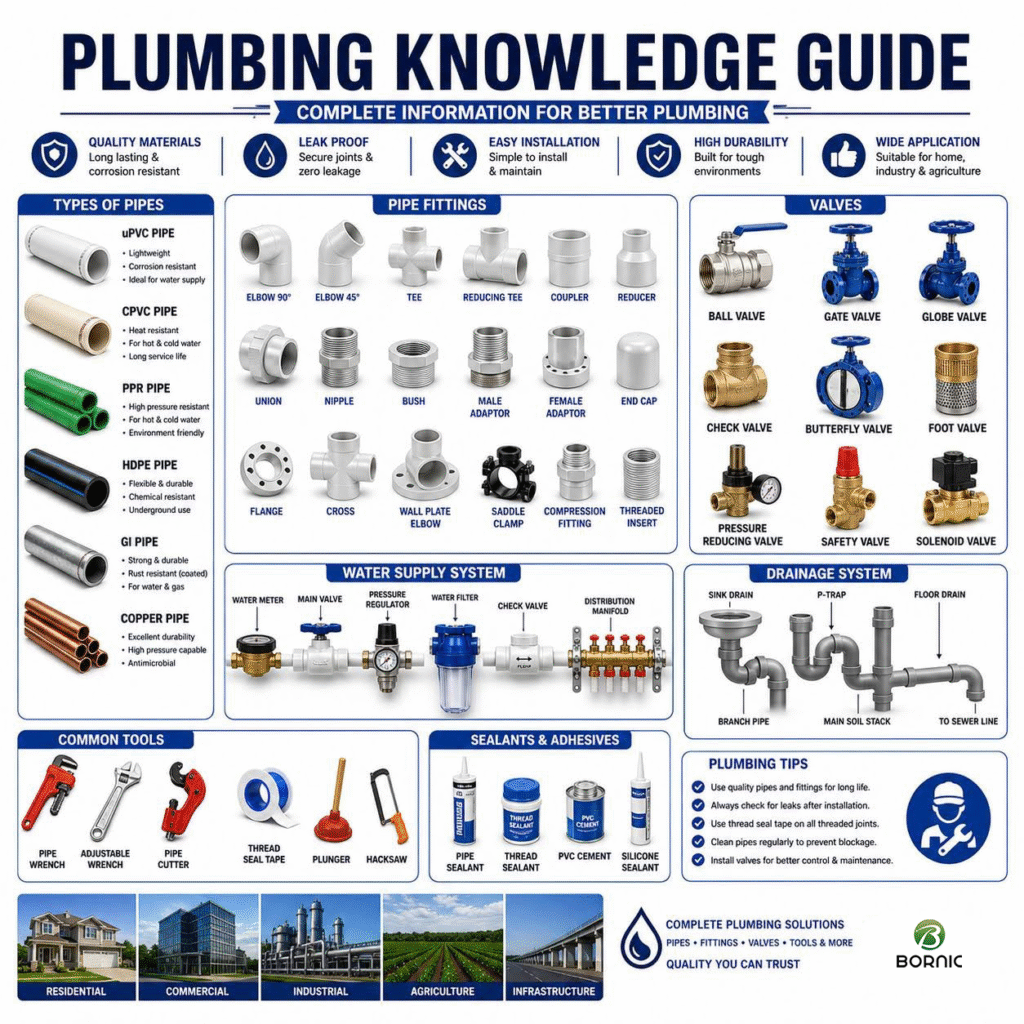
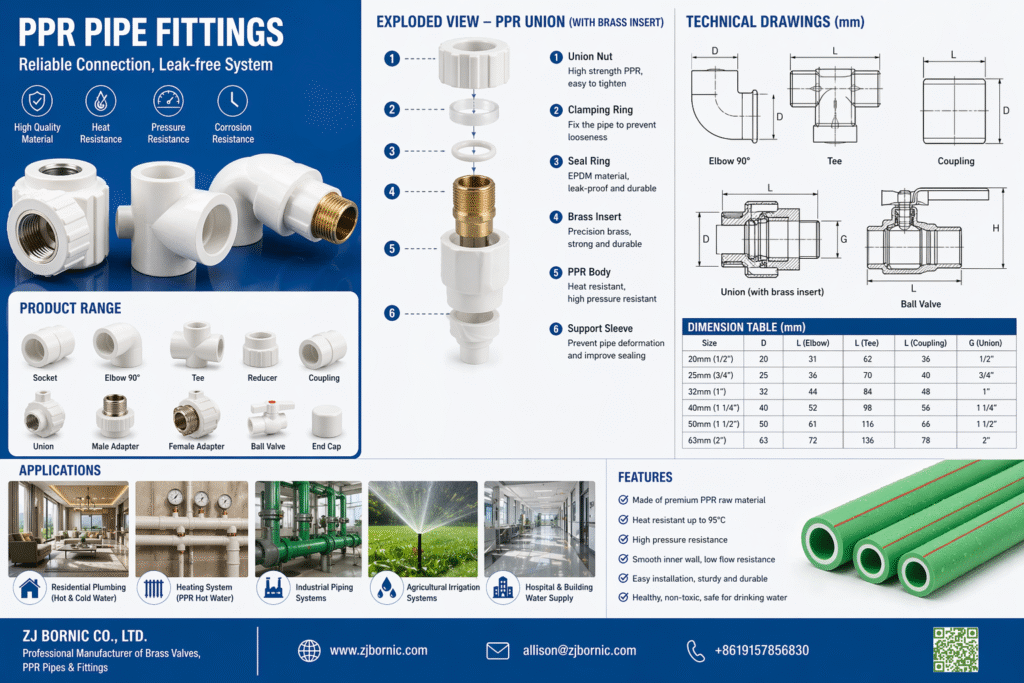
Standardized PPR pipe dimensions ensure compatibility with:
- Brass valves
- Ball valves
- Compression fittings
- Manifolds
4. Long-Term Durability
Correct sizing reduces internal stress caused by:
- High velocity flow
- Thermal expansion
- Pressure fluctuations
Standard PPR Pipe Sizes Overview
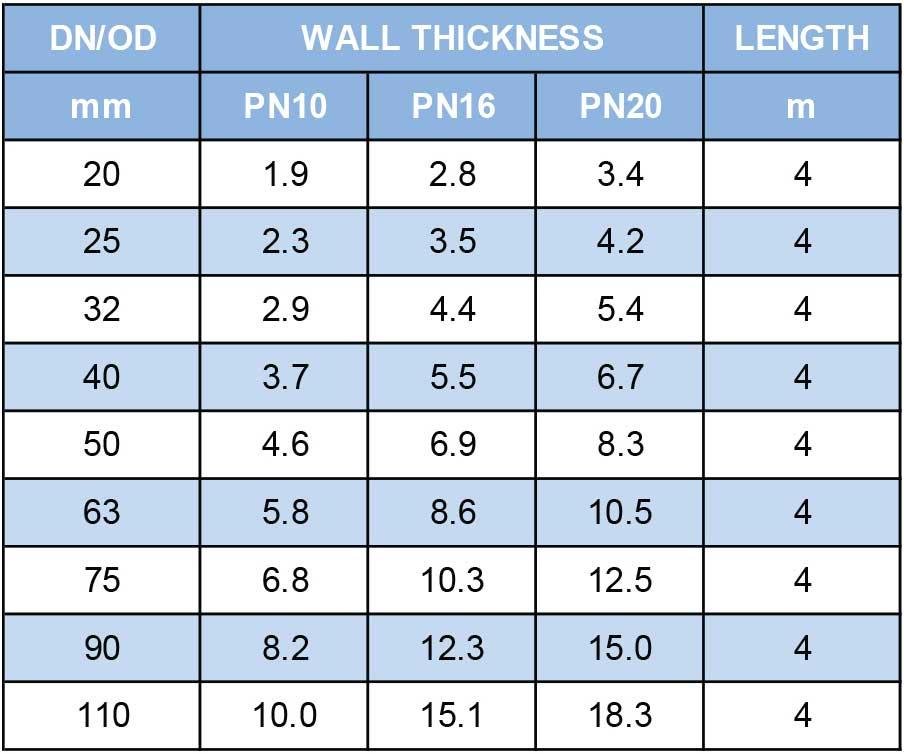
PPR pipes are manufactured in standardized outer diameters (OD), typically ranging from:
👉 20mm to 160mm
These sizes are internationally standardized to ensure compatibility across systems.
Common PPR Pipe Sizes:
- DN20 (20mm)
- DN25 (25mm)
- DN32 (32mm)
- DN40 (40mm)
- DN50 (50mm)
- DN63 (63mm)
- DN75 (75mm)
- DN90 (90mm)
- DN110 (110mm)
- DN125–DN160 (large industrial systems)
PPR Pipe Diameter Chart (Engineering Reference)
| DN Size | Outer Diameter | Pressure Rating | Typical Applications |
|---|---|---|---|
| DN20 | 20mm | PN10 / PN16 | Residential cold water supply |
| DN25 | 25mm | PN16 / PN20 | Household hot water systems |
| DN32 | 32mm | PN16 / PN20 | Apartments and small buildings |
| DN40 | 40mm | PN16 / PN20 | Schools and commercial buildings |
| DN50 | 50mm | PN16 / PN20 / PN25 | Medium distribution systems |
| DN63 | 63mm | PN20 / PN25 | High-rise buildings |
| DN75 | 75mm | PN20 / PN25 | Industrial pipelines |
| DN90 | 90mm | PN20 / PN25 | Water supply mains |
| DN110 | 110mm | PN20 / PN25 | Urban distribution systems |
| DN125–160 | 125–160mm | PN20 / PN25 | Heavy industrial systems |
This classification helps engineers match pipe size with system requirements accurately.
Understanding PPR Pipe Pressure Ratings (PN System)
PPR pipes are also classified by pressure resistance, known as PN ratings.
PN Classes Explained:
- PN10 → Low-pressure cold water systems
- PN16 → Standard residential hot/cold water systems
- PN20 → Medium-high pressure systems
- PN25 → Industrial or high-load applications
Scientific Meaning of PN Rating
PN (Pressure Nominal) indicates the maximum working pressure at 20°C water temperature under standard conditions.
However, real-world performance may vary depending on:
- Temperature
- Flow velocity
- Installation quality
- Long-term aging
Factors That Influence PPR Pipe Size Selection
Selecting the correct PPR pipe size is not only about diameter—it involves multiple engineering variables.
1. Application Type
Different systems require different sizing logic:
- Residential → DN20–DN32
- Commercial → DN32–DN75
- Industrial → DN75–DN160
2. Flow Rate Requirements
Higher water demand requires larger pipe diameter to reduce friction loss.
3. Temperature Conditions
Hot water systems require:
- Higher PN ratings
- Better thermal expansion control
4. System Pressure
Pressure drop increases in undersized pipes, affecting system efficiency.
5. Compatibility with Fittings and Valves
PPR pipes must match:
- Brass valves
- Compression fittings
- Heating manifolds
- Water distribution systems
Engineering Insight: Why Oversizing or Undersizing Matters
Undersized Pipes:
- High friction loss
- Noise in system
- Reduced flow at endpoints
- Pump overload
Oversized Pipes:
- Higher material cost
- Lower flow velocity
- Sediment accumulation risk
Proper balancing is essential.
Advantages of Standardized PPR Pipe Sizes
1. Easy Installation
Standard sizes ensure compatibility across global systems.
2. System Reliability
Correct sizing reduces stress and leakage risk.
3. Cost Efficiency
Avoids unnecessary oversizing or redesign.
4. Long Service Life
Proper hydraulic balance reduces wear and tear.
PPR Pipe Applications by Size
DN20–DN25
- Home water supply
- Bathroom and kitchen systems
DN32–DN50
- Apartment buildings
- Small commercial systems
DN63–DN90
- High-rise buildings
- HVAC water circulation
DN110–DN160
- Industrial plants
- Municipal water distribution
Scientific Background of PPR Material
PPR (Polypropylene Random Copolymer) has:
- High thermal stability
- Chemical resistance
- Long-term pressure resistance
However, its performance depends strongly on:
- Temperature cycles
- Pressure class (PN rating)
- Installation quality
PPR Pipe Size and System Efficiency
Hydraulic efficiency depends on:
- Diameter (D)
- Flow velocity (V)
- Pressure loss (ΔP)
Smaller pipes increase velocity but also increase friction loss, while larger pipes reduce velocity but may increase material cost.
Engineering design must balance these variables.
Key Takeaways
- PPR pipe size directly affects flow and pressure
- Standard sizes range from 20mm to 160mm
- PN rating determines pressure resistance capability
- Correct sizing improves efficiency and system life
- Improper selection leads to system failure risks
Conclusion
Understanding PPR pipe sizes and specifications is essential for any plumbing or industrial piping system. From small residential installations to large-scale infrastructure projects, selecting the correct diameter and pressure rating ensures system stability, efficiency, and long-term durability.
While standardized sizing simplifies selection, real-world engineering still requires careful evaluation of flow demand, pressure conditions, and system design.
Properly selected PPR pipe systems offer a reliable, cost-effective, and long-lasting solution for modern water distribution networks.
Related Products (BORNIC)
- Brass valves for PPR systems
- Compression fittings
- Ball valves
- Manifold systems
- Heating control valves
Website: www.zjbornic.com
Email: allison@zjbornic.com
WhatsApp: +86 19157856830