PPR size is one of the most important factors when designing, installing, or purchasing a PPR piping system. Choosing the correct pipe diameter affects water flow, pressure loss, installation cost, and the overall performance of the plumbing system.
PPR, also written as PP-R or PP-R pipe, is a polypropylene random copolymer piping material widely used for hot and cold water distribution, residential plumbing, commercial buildings, heating systems, and industrial applications.
But what does PPR size actually mean? What are the most common PPR pipe sizes? How do you match a pipe with PPR fittings? And how can you select the right size for a plumbing project?
This guide explains PPR size, PPR pipe dimensions, common sizes in millimeters and inches, pressure classes, fittings, installation considerations, and practical sizing recommendations for buyers, contractors, and distributors.
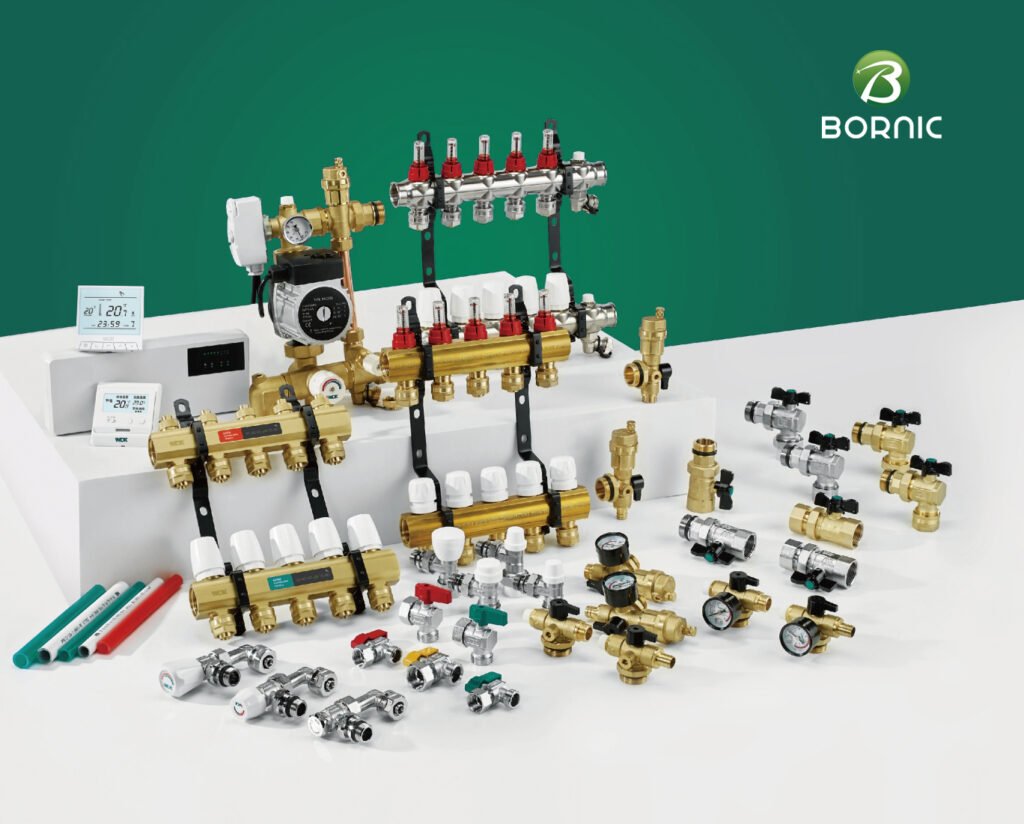
What Is PPR Pipe?
PPR pipe is a plastic piping system manufactured from polypropylene random copolymer. It is commonly used for transporting hot and cold water because it offers good corrosion resistance, relatively low weight, and reliable joint performance when correctly installed.
Unlike metal pipes, PPR pipes do not normally suffer from rust or internal corrosion in the same way as conventional steel piping.
A complete PPR piping system usually consists of:
- PPR pipes
- PPR fittings
- Elbows
- Tees
- Couplings
- Reducers
- Adapters
- Unions
- Valves
- Pipe clips and supports
The pipe and fittings are generally joined using heat fusion. When the correct temperature, heating time, insertion depth, and alignment are used, the pipe and fitting can form a strong continuous connection.
What Does PPR Size Mean?
When people search for PPR size, they are usually referring to the outside diameter of the PPR pipe, normally measured in millimeters.
For example:
- 20 mm PPR pipe
- 25 mm PPR pipe
- 32 mm PPR pipe
- 40 mm PPR pipe
- 50 mm PPR pipe
- 63 mm PPR pipe
- 75 mm PPR pipe
- 90 mm PPR pipe
- 110 mm PPR pipe
This is important because PPR pipe sizing is different from the way some metal pipe systems are described.
A “20 mm” PPR pipe generally refers to a pipe with an outside diameter of approximately 20 mm. The actual internal diameter depends on the wall thickness.
Therefore, two PPR pipes with the same outside diameter can have different internal diameters if they have different wall thicknesses or pressure classes.
PPR Size Chart
The following table provides a practical overview of commonly used PPR pipe sizes.
| PPR Pipe Size | Approx. Inch Reference | Common Applications |
|---|---|---|
| 20 mm | 1/2 inch* | Individual water outlets |
| 25 mm | 3/4 inch* | Branch water lines |
| 32 mm | 1 inch* | Small distribution lines |
| 40 mm | 1 1/4 inch* | Larger branches |
| 50 mm | 1 1/2 inch* | Building distribution |
| 63 mm | 2 inch* | Main water lines |
| 75 mm | 2 1/2 inch* | Larger distribution systems |
| 90 mm | 3 inch* | Commercial and larger systems |
| 110 mm | 4 inch* | Main distribution |
| 160 mm | 6 inch* | Large water systems |
Important: The inch values above are commonly used reference equivalents, not exact dimensional conversions. PPR pipe is normally specified by its metric outside diameter, and the correct connection size should always be confirmed according to the applicable piping system and fitting standard.
Common PPR Pipe Sizes Explained
20 mm PPR Pipe
The 20 mm size is one of the most common choices for residential plumbing.
It is often used for:
- Bathroom water connections
- Kitchen water supply
- Individual faucets
- Small branches
- Hot water distribution
Because the pipe is relatively small, it is suitable for individual fixtures where the required flow rate is moderate.
For a house with multiple bathrooms or long pipe runs, however, using 20 mm throughout the entire system may result in unnecessary pressure loss.
25 mm PPR Pipe
25 mm PPR pipe is commonly used for branch distribution.
It can be suitable for:
- Bathroom branches
- Kitchen supply
- Water heater connections
- Small residential distribution lines
- Multiple nearby fixtures
It provides greater flow capacity than 20 mm while remaining relatively easy to install.
For many residential systems, 20 mm and 25 mm pipes are among the most frequently specified sizes.
32 mm PPR Pipe
32 mm PPR pipe is often used for larger branches and small main lines.
It may be appropriate for:
- Multi-fixture branches
- Apartment plumbing
- Small commercial buildings
- Water heater distribution
- Residential main lines
When several fixtures may operate simultaneously, moving from 25 mm to 32 mm can help reduce pressure loss.
40 mm and 50 mm PPR Pipe
40 mm and 50 mm PPR pipes are generally used for larger distribution systems.
Typical applications include:
- Commercial buildings
- Hotels
- Apartment buildings
- Schools
- Industrial facilities
- Larger domestic water systems
The appropriate size depends on the required flow rate, pipe length, pressure, number of outlets, and simultaneous demand.
63 mm and Larger PPR Pipe
63 mm, 75 mm, 90 mm, 110 mm, and larger PPR pipes are generally associated with main distribution systems and larger projects.
They can be used for:
- Building water mains
- Industrial water distribution
- Large commercial projects
- Agricultural irrigation
- Central water supply
- Mechanical rooms
At these sizes, correct hydraulic calculations become increasingly important.
Why PPR Pipe Size Is Important
Selecting the correct PPR size is not simply a matter of choosing the largest available pipe.
An oversized pipe can increase material and installation costs, while an undersized pipe can create excessive pressure loss and insufficient flow.
The ideal size depends on several factors.
1. Required Flow Rate
The first consideration is how much water needs to move through the pipe.
A single bathroom faucet requires much less flow than a hotel, apartment building, or industrial process.
2. Pipe Length
Longer pipe runs create greater pressure losses.
For a long-distance water supply line, a larger pipe may be required even when the final outlet is relatively small.
3. Number of Fixtures
The number of connected fixtures affects the expected demand.
A house with one bathroom may have very different requirements from a building with ten bathrooms.
4. Available Water Pressure
If the incoming water pressure is relatively low, careful pipe sizing becomes even more important.
A pipe that is too small can cause noticeable pressure reduction at downstream fixtures.
5. Hot Water Temperature
Hot water systems require appropriate PPR material and pressure classification.
As temperature increases, the allowable operating pressure of the piping system can decrease depending on the material specification and pipe series.
PPR Pipe Size vs. Wall Thickness
One of the most important things to understand when purchasing PPR pipes is that diameter alone does not define the complete product specification.
PPR pipes can be manufactured with different wall thicknesses.
For example, a 32 mm PPR pipe may have different internal diameters depending on its pressure class or SDR/pipe series.
A simplified relationship is:
Outside diameter − 2 × wall thickness = approximate inside diameter
For example, if a pipe has an outside diameter of 32 mm and a wall thickness of 5 mm:
32 − 2 × 5 = 22 mm
So its approximate internal diameter would be 22 mm.
This is why buyers should never compare PPR pipes based only on outside diameter. The wall thickness, pressure rating, material grade, and applicable standard also need to be considered.
PPR Size and Pressure Class
PPR manufacturers commonly offer pipes in different pressure classes or pipe series.
The exact classification depends on the applicable standard and manufacturer specification.
Common market descriptions may include:
- PN10
- PN16
- PN20
- PN25
However, buyers should be careful when comparing these numbers.
A pipe marked PN20 does not necessarily mean that it can operate continuously at 20 bar under all temperatures and service conditions. Temperature, service life, pipe series, material properties, and the relevant standard all affect the allowable working pressure.
For hot water applications, it is particularly important to check the manufacturer’s technical data rather than selecting a pipe based only on its PN marking.
PPR Fittings Must Match the Pipe Size
PPR fittings are designed to connect pipes of corresponding outside diameters.
For example:
- 20 mm pipe → 20 mm fitting
- 25 mm pipe → 25 mm fitting
- 32 mm pipe → 32 mm fitting
- 40 mm pipe → 40 mm fitting
- 50 mm pipe → 50 mm fitting
Common PPR fittings include:
- PPR elbow
- PPR tee
- PPR coupling
- PPR reducer
- PPR end cap
- PPR male adapter
- PPR female adapter
- PPR union
- PPR valve
A complete PPR pipe fittings system should be designed so that pipe, fittings, valves, and adapters are compatible in both dimensions and pressure rating.
How to Choose the Right PPR Size for a House
For residential plumbing, there is no single PPR size that works for every application.
A typical system may use different pipe diameters at different stages.
For example, a simplified residential system could use:
Main supply: 25–32 mm
Bathroom branch: 20–25 mm
Individual fixture: 20 mm
The exact selection depends on local plumbing codes, water pressure, building design, pipe length, and expected demand.
For a larger home with multiple bathrooms, a larger main line may be appropriate.
The basic principle is:
Use a sufficiently large main pipe to supply the required demand, then reduce the diameter as the system branches toward individual fixtures.
This approach can provide an efficient balance between flow performance and material cost.
PPR Pipe Sizes in mm and Inches
Many international buyers search for PPR pipe sizes in mm and inches because plumbing markets use different measurement systems.
However, it is important not to treat millimeter and inch sizes as perfect one-to-one conversions.
For example, 25 mm is mathematically close to 0.98 inch, but a PPR pipe described as 25 mm is not necessarily interchangeable with every pipe described as 1 inch.
The reason is that pipe standards use different outside diameters, wall thicknesses, thread dimensions, and connection systems.
For international projects, always specify:
- Pipe outside diameter
- Wall thickness
- Pipe series or SDR
- Pressure classification
- Material
- Applicable standard
- Fitting dimensions
This prevents confusion during purchasing and installation.
What Is the Most Common PPR Size?
For general residential plumbing, 20 mm and 25 mm PPR pipes are among the most commonly used sizes.
However, there is no universal “best” PPR size.
The correct size depends on the application.
For example:
- 20 mm: individual outlets and small branches
- 25 mm: residential branches and small distribution lines
- 32 mm: larger branches and small mains
- 40–63 mm: building distribution
- 75–110 mm: larger commercial and industrial systems
A professional designer should select pipe diameter based on required flow and pressure loss rather than simply choosing the most popular size.
PPR Pipe Size for Hot Water
PPR is widely used for hot water systems, but hot water applications require more careful material selection.
The pipe must be suitable for the expected:
- Water temperature
- Working pressure
- Operating time
- Service life
- Installation environment
Hot water causes thermal expansion, so the piping system must also account for movement.
Depending on the installation, designers may need to consider:
- Expansion loops
- Expansion compensation
- Pipe supports
- Fixed points
- Sliding supports
- Insulation
Correct installation is just as important as choosing the correct pipe size.
PPR Pipe Size for Commercial Projects
Commercial buildings normally require more detailed hydraulic calculations.
Hotels, hospitals, offices, schools, and apartment buildings can have many simultaneous users.
Using a pipe that is too small can lead to:
- Low outlet pressure
- Excessive flow velocity
- Higher pressure losses
- Noise
- Poor user experience
Using an excessively large pipe can increase:
- Material costs
- Installation costs
- Water volume within the system
- Heating time for hot water
Therefore, commercial projects should generally use a hydraulic design rather than selecting sizes based only on a simple PPR size chart.
PPR Sizing Mistakes to Avoid
Several common mistakes can create problems during installation.
Choosing the pipe based only on the inch equivalent
PPR is normally specified using metric outside diameter. Always verify the actual dimensions.
Ignoring wall thickness
Two pipes with the same outside diameter can have different internal diameters.
Using undersized main pipes
This can create excessive pressure loss when several outlets operate simultaneously.
Mixing incompatible standards
Pipe and fittings should belong to compatible systems and dimensions.
Ignoring temperature
Hot water affects the pressure capability and service life of thermoplastic piping.
Buying only based on price
A low-cost pipe may have a different wall thickness, material specification, pressure classification, or quality level.
How to Buy PPR Pipes and Fittings from an OEM Manufacturer
For distributors and plumbing brands, buying directly from a PPR manufacturer or OEM supplier can provide advantages in pricing, customization, packaging, and product consistency.
When requesting a quotation, provide as much technical information as possible.
A professional RFQ should include:
- PPR pipe size
- Wall thickness
- Pipe series/SDR
- Pressure class
- Length per pipe
- Color
- Material specification
- Fitting sizes
- Applicable standard
- Quantity
- Packaging requirements
- Logo requirements
- Destination market
For PPR pipes and fittings, it is also useful to request samples before placing a large production order.
A good OEM supplier should be able to provide technical datasheets, product drawings, sample products, packaging information, and production lead times.
Frequently Asked Questions About PPR Size
What is the standard PPR pipe size?
Common PPR sizes include 20, 25, 32, 40, 50, 63, 75, 90, and 110 mm. Larger diameters are also available for commercial and industrial applications.
What PPR size is used for a bathroom?
20 mm is commonly used for individual bathroom outlets, while 25 mm or larger may be used for the branch supplying several fixtures.
Is 25 mm PPR the same as 1 inch?
Not exactly. 25 mm refers to the nominal outside diameter of the PPR pipe, while “1 inch” can refer to a nominal pipe or connection size. The actual dimensions depend on the applicable standard.
What is the difference between PPR pipe and PP-R pipe?
In most plumbing contexts, PPR, PP-R, and PP-R pipe refer to polypropylene random copolymer piping. The exact material designation should be confirmed from the manufacturer’s technical documentation.
Which PPR size is best for a house?
There is no single best size. A typical residential system may use 20 mm for individual branches, 25 mm for distribution branches, and 32 mm or larger for the main supply, depending on demand and design conditions.
Conclusion: Choosing the Right PPR Size
Understanding PPR size is essential for anyone involved in plumbing design, construction, distribution, or purchasing.
The most common sizes range from 20 mm to 110 mm, with 20 mm and 25 mm frequently used in residential applications and larger diameters used for commercial, industrial, and main distribution systems.
However, pipe diameter is only one part of the specification. Buyers should also consider wall thickness, pipe series, pressure classification, temperature, flow rate, installation conditions, and compatibility with PPR fittings.
For distributors and plumbing brands, selecting an experienced OEM manufacturer can make the purchasing process much easier. A reliable supplier should be able to provide not only PPR pipes and fittings, but also technical specifications, customized products, OEM packaging, consistent quality, and professional support.
If you are sourcing PPR piping products for a new plumbing project, wholesale business, or private-label brand, contact BORNIC to discuss your required PPR size, fittings, specifications, quantities, and OEM requirements. We can help you develop a complete piping solution based on your target market and application.