Introduction
A leaking shut off valve is one of the most common plumbing problems in residential and commercial water systems. Whether it is an angle stop valve, toilet stop valve, sink stop valve, or water stop valve, even a small leak can lead to water damage, increased utility bills, and long-term system corrosion.
Many homeowners ask:
- How to stop leaking shut off valve?
- Why is my angle stop valve leaking?
- Do I need to replace or repair the valve?
- Can a quarter turn stop valve be fixed?
In this guide, we will explain why shut off valves leak, how to fix a leaking stop valve, and when you should replace instead of repair.
What Is a Shut Off Valve?
A shut off valve (also called a stop valve or supply stop valve) controls water flow in plumbing systems.
Common types include:
- Angle stop valve
- Angular stop valve
- Toilet stop valve
- Sink stop valve
- Under sink stop valve
- Compression stop valve
- Quarter turn stop valve
- Water stop valve
These valves are installed under sinks, toilets, showers, and water supply lines to allow local water isolation.
Why Do Shut Off Valves Leak?
Before fixing the problem, it is important to understand the cause.
1. Worn Internal Seal
The most common reason is internal rubber or PTFE seal degradation.
2. Loose Packing Nut
The valve stem packing may loosen over time.
3. Corroded Brass Components
Low-quality brass can corrode, causing leakage.
4. Mineral Build-Up
Hard water causes calcium deposits inside valve bodies.
5. Over-Tightening
Excess force can damage threads or sealing surfaces.
How to Stop a Leaking Shut Off Valve
There are several repair methods depending on the leak type.
Step 1: Identify the Leak Source
Check where water is leaking from:
- Valve handle → stem leak
- Pipe connection → thread leak
- Valve body → internal failure
This determines whether repair is possible.
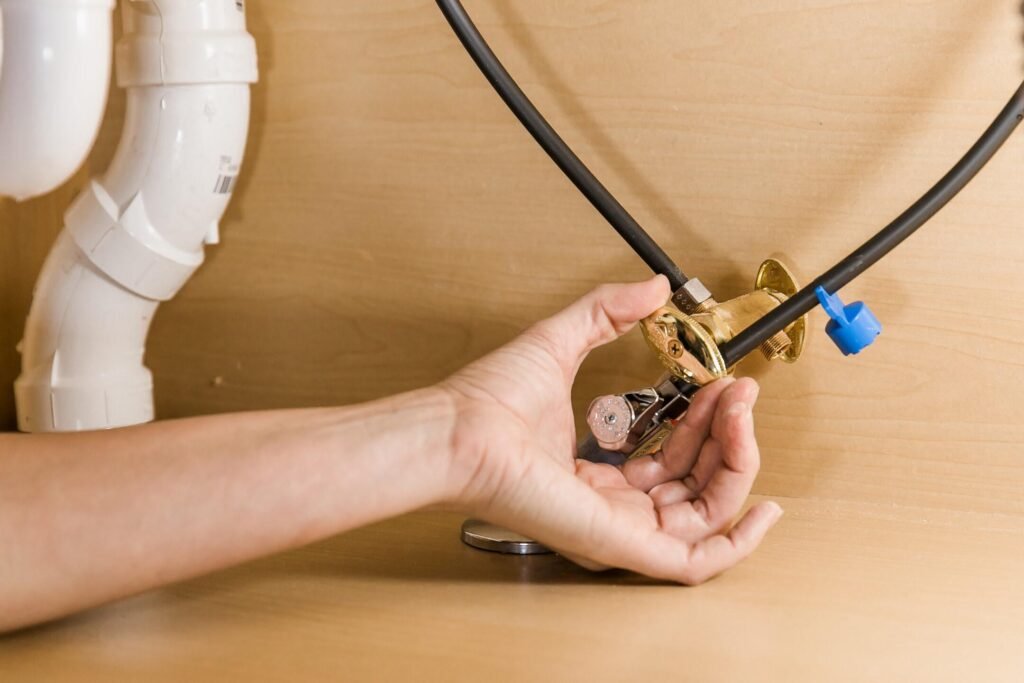
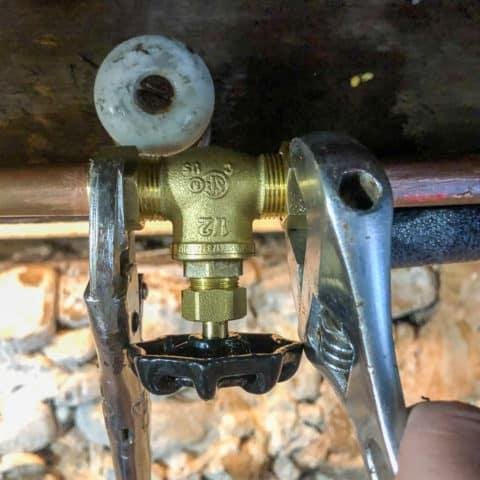
Step 2: Tighten the Packing Nut (Quick Fix)
If your angle stop valve or toilet stop valve is leaking from the handle:
- Locate the packing nut
- Use a wrench to tighten slightly
- Turn water back on and test
This often solves minor leaks in:
- angle stop valve for toilet
- angle stop valve for sink
- under sink stop valve
Step 3: Replace Teflon Tape on Threads
If leak occurs at connection points:
- Shut off main water supply
- Remove valve connection
- Clean threads
- Reapply PTFE tape
- Reinstall tightly
This applies to:
- water stop valve
- supply stop valve
- straight stop valve
Step 4: Replace the Washer or Cartridge
For modern quarter turn stop valve or compression stop valve:
- Internal ceramic cartridge may fail
- Rubber washer may wear out
Replacement is often easier than repair.
Step 5: Replace the Entire Valve (Best Solution)
If the valve body is cracked or heavily corroded:
Replace it completely.
Common replacement cases:
- toilet stop valve replacement
- kitchen sink stop valve failure
- compression angle stop valve leakage
How to Replace a Stop Valve (Step-by-Step)
Many users search:
👉 how to replace a stop valve
Step 1: Shut off main water supply
Step 2: Drain remaining water
Step 3: Remove old valve
Step 4: Install new valve
Step 5: Apply PTFE tape
Step 6: Tighten and test
Replacement is often safer than repeated repair.
Angle Stop Valve Leaking: Special Case
The angle stop valve is one of the most commonly leaking valves in homes.
Popular keywords:
- angle stop valve
- angle stop valves
- toilet angle stop valve
- angle stop valve for sink
Common leak points:
- Handle stem
- Compression joint
- Valve outlet
Solution:
- Tighten packing nut
- Replace internal seal
- Replace full valve if corrosion exists
Toilet Stop Valve Leaking Issues
The toilet system uses a dedicated shut off valve:
- toilet stop valve
- angle stop valve toilet
- stop valve toilet
Symptoms:
- Constant dripping
- Weak shut off
- Running toilet water
Related issue:
Many users search:
👉 fill valve toilet won’t stop running
This is often NOT valve-related but float mechanism failure.
Sink Stop Valve and Under Sink Stop Valve Leaks
Common keywords:
- sink stop valve
- under sink stop valve
- kitchen sink stop valve
Causes:
- Loose compression nut
- Worn washer
- Cracked valve body
Curb Stop Valve and Underground Leaks
A curb stop valve controls water supply from municipal lines.
Keywords:
- curb stop valve
- curb stop valve box
Leak issues:
- Underground corrosion
- Valve seat failure
Repair usually requires professional service.
Stop and Waste Valve Leakage
A stop and waste valve may leak due to:
- Damaged drain port seal
- Frozen internal components
- Sediment blockage
It is commonly used in irrigation systems and outdoor pipelines.
Stop Check Valve Problems
A stop check valve combines shutoff and backflow prevention.
Common issues:
- Internal spring failure
- Reverse flow leakage
Used in:
- HVAC systems
- Industrial pipelines
Cycle Stop Valve and Pressure Issues
A cycle stop valve regulates pump pressure.
Leak symptoms are often related to:
- Overpressure
- Diaphragm wear
How to Prevent Shut Off Valve Leaks
1. Use High-Quality Brass Valves
Low-grade materials fail faster.
2. Avoid Over-Tightening
Brass valves can crack.
3. Use PTFE Tape Properly
Prevents thread leaks.
4. Regular Maintenance
Check valves every 6–12 months.
5. Install Correct Valve Type
Use:
- angle stop valve for toilets
- compression stop valve for copper pipes
- quarter turn stop valve for fast shutoff
When to Replace Instead of Repair
Replace valve if:
- Body is cracked
- Severe corrosion exists
- Frequent leaks occur
- Valve cannot fully shut off
Replacement is more cost-effective long term.
Why Choose BORNIC Stop Valves?
BORNIC manufactures high-quality brass valves for global plumbing and HVAC systems.
Our product range includes:
- Angle stop valves
- Toilet stop valves
- Sink stop valves
- Water stop valves
- Compression stop valves
- Stop and waste valves
- Stop check valves
Advantages:
- CW617N brass material
- Precision machining
- Leak-free sealing design
- Long service life
- OEM & ODM customization
- Factory direct supply
Conclusion
A leaking shut off valve is a common but solvable plumbing problem. Whether you are dealing with an angle stop valve, toilet stop valve, sink stop valve, or water stop valve, the solution depends on identifying the leak source and choosing the right repair method.
In many cases, simple tightening or seal replacement is enough. However, for corroded or damaged valves, full replacement is the safest and most reliable option.
High-quality brass valves significantly reduce the risk of leakage and improve long-term system stability.
For reliable brass stop valves and plumbing solutions, BORNIC is your trusted manufacturing partner.
Website: www.zjbornic.com
Email: allison@zjbornic.com
WhatsApp: +86 19157856830