Introduction
One of the most common questions asked by homeowners, plumbers, HVAC technicians, and industrial installers is:
Do you use Teflon tape on brass fittings?
The short answer is:
Yes, in most threaded brass fitting applications, Teflon tape (PTFE tape) is recommended to help create a leak-free seal.
However, the complete answer depends on the type of brass fitting, thread design, pressure requirements, and application.
Using Teflon tape incorrectly can cause leaks, damaged threads, or connection failures. On the other hand, proper installation can significantly improve sealing performance and service life.
In this guide, we’ll explain when to use Teflon tape on brass fittings, when not to use it, how to apply it correctly, and common mistakes to avoid.
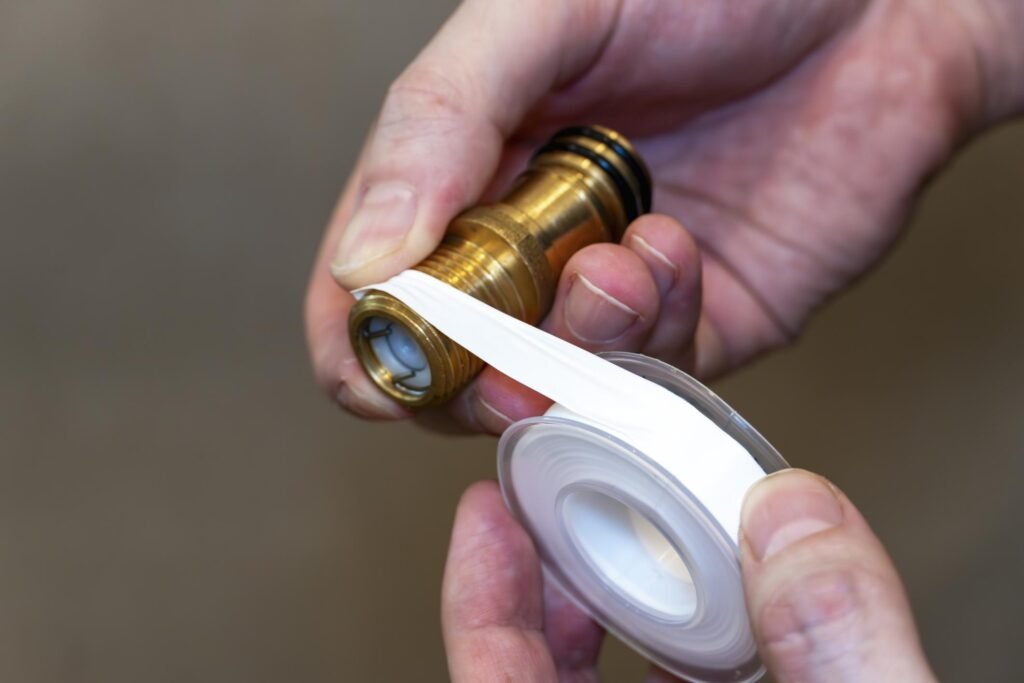
What Is Teflon Tape?
Teflon tape, also known as PTFE tape (Polytetrafluoroethylene tape), is a thin sealing tape used on threaded pipe connections.
Its primary functions are:
- Prevent leaks
- Lubricate threads
- Reduce friction during tightening
- Improve sealing performance
- Protect threads from corrosion
Teflon tape is widely used in:
- Plumbing systems
- HVAC systems
- Water supply networks
- Compressed air systems
- Gas distribution systems
Do You Use Teflon Tape on Brass Fittings?
Yes—For Most Threaded Brass Fittings
If the brass fitting has tapered pipe threads such as:
- NPT (National Pipe Thread)
- BSPT (British Standard Pipe Taper)
Teflon tape is generally recommended.
Examples include:
- Brass ball valves
- Brass nipples
- Brass couplings
- Brass elbows
- Brass tees
- Brass adapters
These threaded connections rely on thread interference to create a seal.
Teflon tape fills small gaps between threads and helps prevent leaks.
When Teflon Tape Is Required
Brass Pipe Fittings
Threaded brass pipe fittings almost always benefit from PTFE tape.
Common examples:
- Brass nipples
- Threaded couplings
- Male adapters
- Threaded unions
The tape creates a tighter seal while reducing thread wear.
Brass Ball Valves
Most threaded brass ball valves require Teflon tape on male threads during installation.
Applications include:
- Residential plumbing
- HVAC systems
- Irrigation systems
- Industrial pipelines
Properly applied tape helps prevent leaks under pressure.
Gas Applications
Special yellow PTFE tape is commonly used for:
- Natural gas
- Propane
- LPG systems
Always follow local plumbing and gas regulations.
When You Should NOT Use Teflon Tape on Brass Fittings
Compression Fittings
Compression fittings seal through the compression ferrule, not through the threads.
Examples:
- Brass compression fittings
- Compression elbows
- Compression tees
Adding Teflon tape to the threads typically provides no sealing benefit.
In some cases, it may even interfere with proper tightening.
Flare Fittings
Flare fittings create a metal-to-metal seal.
The sealing surface is the flare itself—not the threads.
Examples include:
- Refrigeration fittings
- HVAC flare fittings
- Gas appliance connections
Teflon tape should generally not be applied.
Gasket-Sealed Fittings
Many modern brass fittings use:
- EPDM gaskets
- Rubber seals
- O-rings
The gasket provides the seal.
Adding tape is unnecessary.
Examples:
- Washing machine connectors
- Flexible hose connectors
- Union fittings with washers
Why Brass Fittings Need Thread Sealant
Even precision-machined brass threads are not perfectly airtight.
Microscopic gaps exist between male and female threads.
Without thread sealant:
- Water can seep through threads
- Air leaks may occur
- Pressure losses can develop
PTFE tape helps fill these tiny voids and improves sealing efficiency.
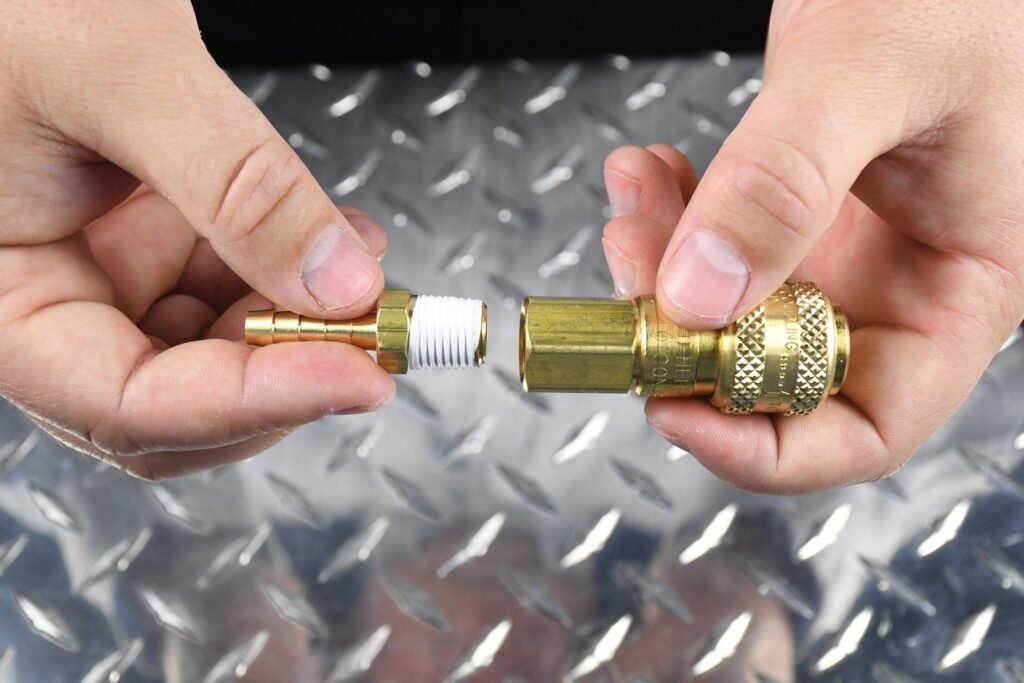
How to Apply Teflon Tape to Brass Fittings
Correct installation is essential.
Step 1: Clean the Threads
Remove:
- Dirt
- Oil
- Metal shavings
- Old tape residue
Clean threads improve sealing performance.
Step 2: Wrap in the Correct Direction
Always wrap the tape:
Clockwise
when looking at the end of the male thread.
This prevents the tape from unraveling during assembly.
Step 3: Apply the Right Number of Wraps
Typical recommendation:
- Small fittings: 3–4 wraps
- Medium fittings: 4–5 wraps
- Large fittings: 5–6 wraps
Avoid excessive tape.
Too much tape may crack fittings or damage threads.
Step 4: Keep the First Thread Exposed
Leave the first thread partially uncovered.
This helps prevent tape fragments from entering the pipeline.
Step 5: Tighten Properly
Hand tighten first.
Then use the appropriate wrench.
Avoid overtightening.
Brass is durable but can still crack under excessive force.
Teflon Tape vs Pipe Thread Sealant
Many installers ask:
Which is better?
Teflon Tape
Advantages:
- Easy to use
- Clean installation
- Inexpensive
- Widely available
Disadvantages:
- Can tear during installation
- Not ideal for heavily damaged threads
Pipe Thread Sealant (Pipe Dope)
Advantages:
- Excellent sealing performance
- Suitable for high pressure systems
- Works well on damaged threads
Disadvantages:
- Messier application
- Longer cleanup
Using Both Together
Many professional plumbers use:
- PTFE tape
- Pipe thread sealant
This combination provides maximum sealing reliability.
Especially for:
- Commercial systems
- Industrial piping
- High-pressure installations
Common Mistakes When Using Teflon Tape
Wrapping the Wrong Direction
This is the most common mistake.
Counterclockwise wrapping causes the tape to unwind during assembly.
Using Too Much Tape
Excess tape may:
- Damage threads
- Split fittings
- Restrict flow
Covering Internal Openings
Loose tape fragments can enter the system and cause blockages.
Using Tape on Compression Fittings
Compression fittings do not rely on thread sealing.
Using tape often creates installation problems.
Reusing Old Tape
Always remove old tape and apply fresh PTFE tape.
Applications of Brass Fittings with Teflon Tape
Residential Plumbing
Common uses:
- Water heaters
- Bathroom plumbing
- Kitchen installations
HVAC Systems
Used on:
- Boiler connections
- Heat pumps
- Radiator systems
- Chilled water systems
Irrigation Systems
Applications include:
- Sprinkler systems
- Agricultural irrigation
- Landscape watering
Industrial Fluid Systems
Suitable for:
- Compressed air
- Hydraulic systems
- Water treatment plants
Benefits of Properly Sealed Brass Fittings
Using Teflon tape correctly offers several advantages:
Leak Prevention
The primary benefit.
Easier Installation
Threads engage more smoothly.
Reduced Corrosion
PTFE creates a barrier against moisture.
Longer Service Life
Proper sealing reduces wear and maintenance.
Improved Reliability
Essential for both residential and industrial systems.
Choosing High-Quality Brass Fittings
Even the best Teflon tape cannot compensate for poor-quality fittings.
Look for:
- Precision-machined threads
- High-quality brass material
- Consistent dimensions
- Pressure-tested products
Common brass grades include:
- CW617N
- CW602N (DZR Brass)
- Lead-Free Brass
Why Choose BORNIC Brass Fittings?
BORNIC manufactures premium brass valves and fittings for global plumbing, HVAC, and industrial markets.
Our products feature:
- High-quality brass materials
- Precision-machined threads
- Excellent sealing performance
- OEM and ODM customization
- Competitive factory pricing
- Strict quality control
Our product range includes:
- Brass ball valves
- Brass fittings
- Brass compression fittings
- Brass check valves
- Brass manifolds
- Brass plumbing accessories
With decades of manufacturing experience, BORNIC supplies reliable solutions to customers worldwide.
Conclusion
So, do you use Teflon tape on brass fittings?
In most threaded brass fitting applications, the answer is yes. PTFE tape helps create a secure, leak-free connection while improving thread engagement and long-term reliability.
However, it should not be used on compression fittings, flare fittings, or gasket-sealed connections where the sealing mechanism does not rely on threads.
Understanding when and how to use Teflon tape correctly can prevent leaks, reduce maintenance costs, and extend the lifespan of your plumbing or HVAC system.
For premium brass fittings, brass valves, and customized plumbing solutions, contact BORNIC today.
Website: www.zjbornic.com
Email: allison@zjbornic.com
WhatsApp: +86 19157856830