What Are Brass Inserts?
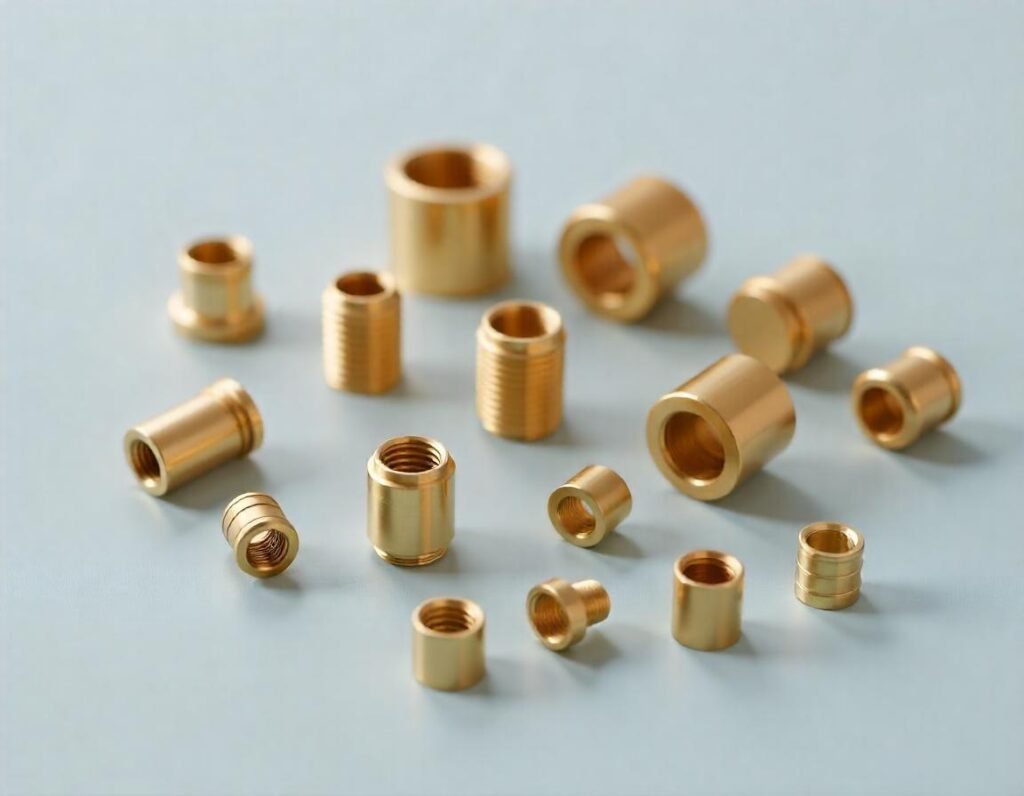
Brass inserts are threaded fastening components designed to create durable and reusable threads in materials that may not be strong enough to hold a screw directly. They are widely used in plastic parts, wooden furniture, metal assemblies, electronic products, automotive components, and industrial equipment.
Compared with directly tapping threads into plastic or wood, brass inserts provide significantly higher pull-out strength, wear resistance, and long-term reliability.
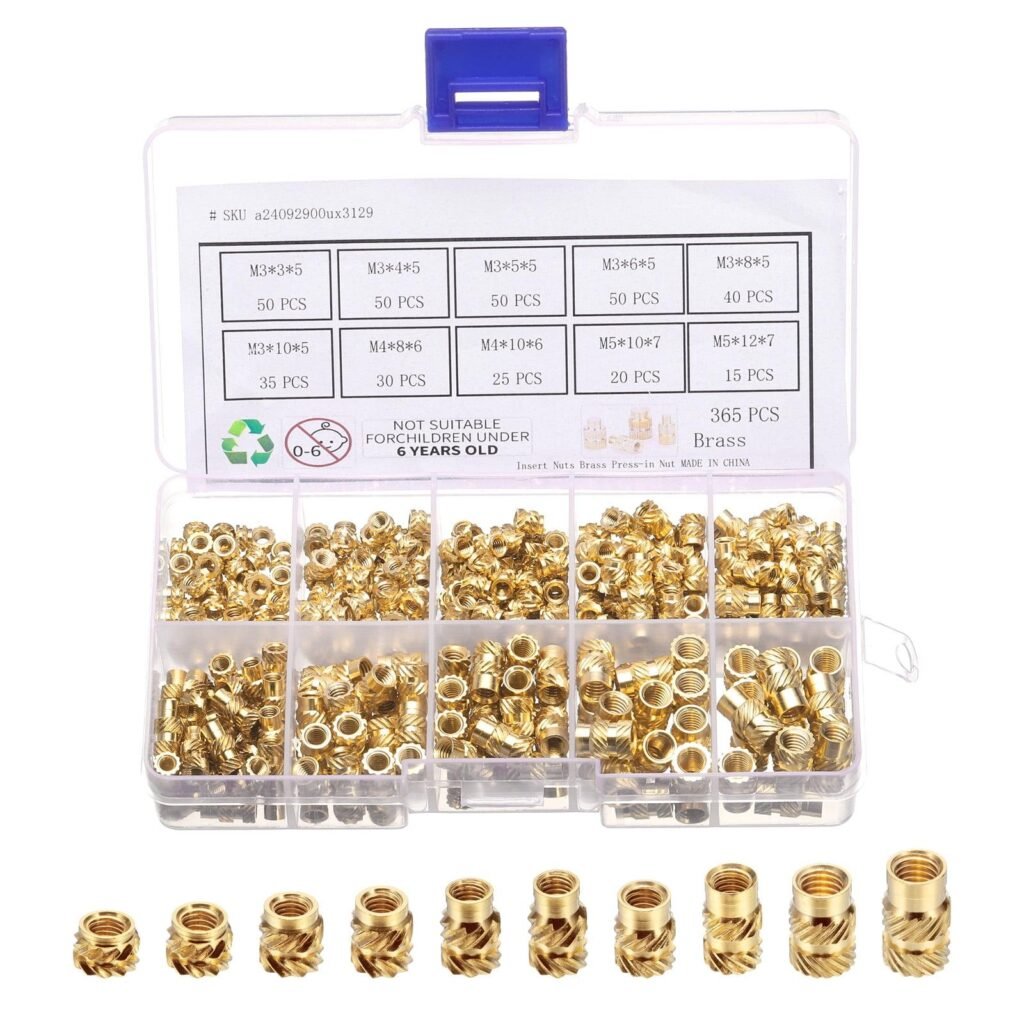
Today, brass inserts have become an essential component in modern manufacturing industries, especially in injection molding, 3D printing, furniture production, and engineering assemblies.
Why Choose Brass Inserts?
Brass remains one of the most popular materials for threaded inserts due to its unique combination of properties:
Excellent Corrosion Resistance
Brass naturally resists rust and corrosion, making it suitable for humid environments and long-term applications.
Superior Machinability
Brass can be precision machined to produce highly accurate threads and knurled surfaces.
High Strength
Brass threaded inserts provide stronger thread retention than molded plastic threads.
Electrical Conductivity
Many electronic assemblies use brass inserts because of their conductivity and grounding capabilities.
Cost-Effective Solution
Compared with stainless steel inserts, brass inserts offer an excellent balance between performance and cost.
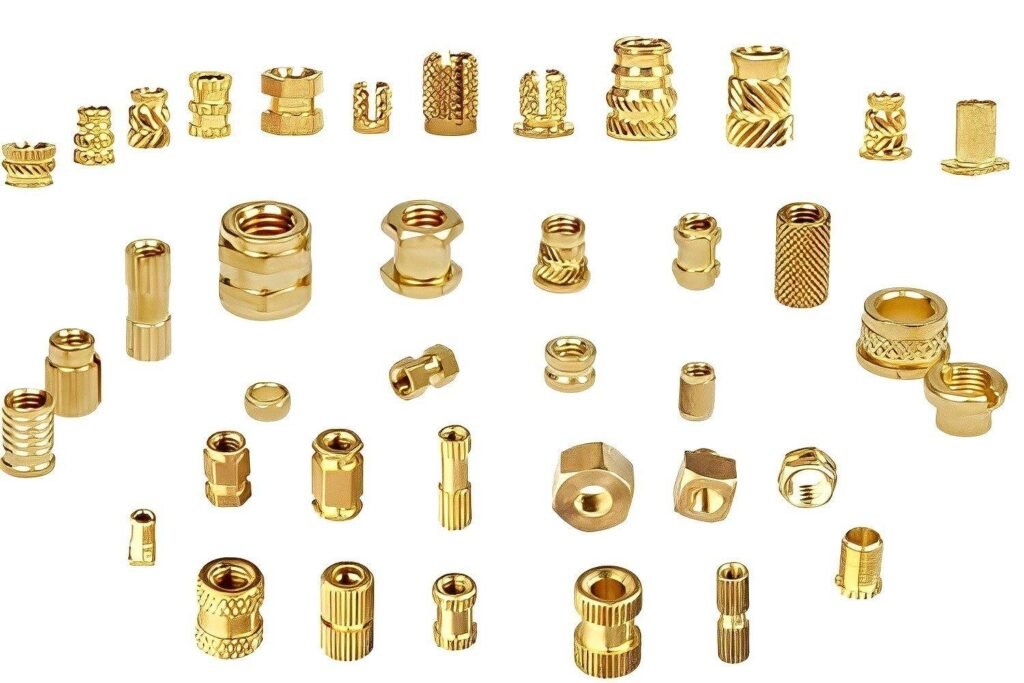
Types of Brass Inserts
Brass Threaded Inserts
Brass threaded inserts are the most common type used to create internal threads in plastic, wood, or composite materials.
These inserts typically feature:
- Internal metric or imperial threads
- Knurled external surfaces
- Heat-set or press-fit designs
Popular search terms include:
- brass threaded inserts
- threaded brass inserts
- brass threaded insert
- brass thread inserts
Brass Inserts for Plastic
Brass inserts for plastic are specifically designed for thermoplastics and thermoset materials.
They are widely used in:
- Injection molded parts
- Consumer electronics
- Automotive interiors
- Medical devices
- 3D printed components
Benefits include:
- Increased thread life
- Improved pull-out resistance
- Better assembly quality
Heat-set installation is particularly common because it allows the insert to melt into the plastic and create a strong bond.
Popular keywords:
- brass inserts for plastic
- brass threaded inserts for plastic
- brass press inserts
Brass Inserts for Wood
Brass inserts for wood are commonly used in furniture manufacturing and woodworking projects.
Applications include:
- Cabinets
- Tables
- Chairs
- Modular furniture
- DIY woodworking projects
Advantages:
- Reusable threads
- Stronger screw retention
- Easy maintenance and replacement
Popular search terms:
- brass inserts for wood
- brass threaded inserts for wood
Brass Threaded Inserts for Metal
Although less common, brass threaded inserts for metal are used in specific engineering applications where vibration resistance or repairability is required.
Industries include:
- Aerospace
- Machinery
- Industrial equipment
- Electrical enclosures
Benefits:
- Thread repair
- Corrosion resistance
- Reduced wear
Popular keyword:
- brass threaded inserts for metal
Brass Screw Inserts
Brass screw inserts are designed to accept machine screws and bolts while providing durable internal threads.
These inserts are commonly found in:
- Plastic housings
- Consumer products
- Electronic equipment
- Industrial machinery
Popular keyword:
- brass screw inserts
M3 Brass Inserts and Other Common Sizes
One of the most searched products in the market is the M3 brass insert.
Common thread sizes include:
| Metric Size | Typical Applications |
|---|---|
| M2 | Electronics |
| M2.5 | PCB assemblies |
| M3 | 3D printing |
| M4 | Plastic enclosures |
| M5 | Consumer products |
| M6 | Industrial equipment |
| M8 | Heavy-duty assemblies |
Among these sizes, M3 brass inserts are especially popular for 3D printed components and electronic housings.
Installation Methods for Brass Inserts
Heat-Set Installation
The most common method for plastic applications.
Steps:
- Heat the insert using a soldering iron.
- Press the insert into the prepared hole.
- Allow the plastic to cool.
- The insert becomes permanently embedded.
Advantages:
- Excellent pull-out resistance
- Professional appearance
- Fast installation
Press-Fit Installation
Brass press inserts are mechanically pressed into a pre-drilled hole.
Advantages:
- Fast production
- No heating required
- Suitable for thermoset plastics
Ultrasonic Installation
Often used in mass production.
Benefits:
- Strong bond
- High efficiency
- Automated manufacturing compatibility
Screw-In Installation
Common for wood inserts.
Benefits:
- Easy installation
- Suitable for furniture
- Reusable
Applications of Brass Inserts
Electronics Industry
Used in:
- Laptop housings
- Routers
- Smart home devices
- Consumer electronics
Automotive Industry
Found in:
- Interior panels
- Dashboard components
- Sensor housings
Furniture Industry
Used for:
- Flat-pack furniture
- Adjustable shelving
- Cabinet assembly
3D Printing Industry
Brass inserts are widely adopted in additive manufacturing.
Benefits include:
- Durable threads
- Repeated assembly capability
- Enhanced product lifespan
Industrial Equipment
Applications:
- Machine covers
- Electrical cabinets
- Automation systems
How to Select the Right Brass Insert
When selecting brass inserts, consider:
Material
Choose according to application:
- Free-cutting brass
- Lead-free brass
- Nickel-plated brass
Thread Size
Common options:
- M3 brass inserts
- M4 brass inserts
- M5 brass inserts
- M6 brass inserts
Installation Method
Select between:
- Heat-set
- Press-fit
- Ultrasonic
- Screw-in
Pull-Out Strength
Higher knurl depth generally provides stronger retention.
Operating Environment
Consider:
- Humidity
- Temperature
- Chemical exposure
Quality Standards for Brass Inserts
High-quality brass inserts should feature:
- Precision-machined threads
- Consistent dimensions
- Clean knurling
- Burr-free surfaces
- Corrosion-resistant finish
Reliable manufacturers perform:
- Thread gauge testing
- Salt spray testing
- Pull-out testing
- Dimensional inspection
Why Choose BORNIC Brass Inserts?
BORNIC specializes in manufacturing precision brass components for industrial and engineering applications.
Our advantages include:
- High-quality brass materials
- Precision CNC machining
- Custom dimensions available
- OEM and ODM services
- Strict quality control
- Competitive factory pricing
Whether you need brass threaded inserts for plastic, brass inserts for wood, brass threaded inserts for metal, or custom M3 brass inserts, BORNIC can provide reliable solutions tailored to your requirements.
Conclusion
Brass inserts are a simple yet highly effective solution for creating strong, reusable threads in plastic, wood, and metal applications. From brass threaded inserts and brass screw inserts to specialized brass inserts for plastic and wood, these components improve product durability, assembly efficiency, and long-term performance.
As industries continue to demand stronger and more reliable fastening solutions, brass inserts will remain an essential component in modern manufacturing.
For more information about custom brass inserts, threaded inserts, and precision brass components, contact BORNIC today.
Website: www.zjbornic.com
Email: allison@zjbornic.com