Introduction
Industrial brass components are essential building blocks in modern infrastructure, plumbing systems, HVAC installations, water treatment facilities, gas distribution networks, and manufacturing equipment.
From brass valves and fittings to precision-machined connectors and custom-engineered assemblies, brass continues to be one of the most trusted engineering materials worldwide.
As industries increasingly focus on durability, sustainability, and cost efficiency, demand for high-quality brass components continues to grow.
In this guide, we explore the manufacturing process, applications, material standards, supplier selection criteria, and global sourcing trends shaping today’s brass industry.
What Are Industrial Brass Components?
Industrial brass components refer to engineered parts manufactured from brass alloys and used in mechanical, plumbing, fluid control, and industrial systems.
Common examples include:
- Brass pipe fittings
- Brass ball valves
- Brass hose fittings
- Brass adapters
- Brass nipples
- Brass manifolds
- Brass connectors
- Brass compression fittings
- Precision-machined brass parts
These components are widely used because brass offers an ideal balance of strength, corrosion resistance, machinability, and cost-effectiveness.
Why Brass Remains One of the Most Important Industrial Materials
Brass has been used for centuries, but modern industrial applications continue to expand due to several advantages.
Corrosion Resistance
Brass performs exceptionally well in water and humid environments.
This makes it ideal for:
- Plumbing systems
- HVAC installations
- Water treatment plants
- Irrigation systems

Excellent Machinability
Compared with stainless steel and other engineering metals, brass is easier to machine.
Benefits include:
- Faster production
- Higher precision
- Lower manufacturing costs
- Consistent product quality
Long Service Life
Industrial brass components can operate reliably for decades when properly installed.
High Pressure Capability
Many brass components are designed to withstand demanding pressure conditions in commercial and industrial systems.
The Industrial Brass Manufacturing Process
Modern brass manufacturing combines advanced metallurgy with precision engineering.
Step 1: Material Selection
The production process begins with certified brass alloys.
Common materials include:
- CW617N
- CW602N
- C37700
- Lead free brass alloys
Material selection affects:
- Corrosion resistance
- Mechanical performance
- Drinking water safety
- Regulatory compliance
Step 2: Hot Forging
Most high-quality industrial brass components are produced through hot forging.
Advantages include:
- Improved grain structure
- Increased density
- Higher pressure resistance
- Superior durability
Forged brass products are generally preferred over cast alternatives in critical applications.
Step 3: CNC Machining
Advanced CNC equipment ensures:
- Tight tolerances
- Consistent dimensions
- Accurate threading
- Superior sealing performance
Precision machining is particularly important for valves, fittings, and fluid control products.
Step 4: Surface Treatment
Depending on application requirements, brass components may receive:
- Natural brass finish
- Nickel plating
- Chrome plating
- Protective coatings
These treatments enhance both appearance and corrosion resistance.
Industrial Applications of Brass Components
Industrial brass products are used across virtually every major sector.
Plumbing Systems
Brass fittings and valves remain standard choices for:
- Residential buildings
- Commercial facilities
- Municipal water systems
HVAC Systems
Heating and cooling systems rely heavily on brass components.
Applications include:
- Manifolds
- Balancing valves
- Thermostatic valves
- Pump connections
Gas Distribution Systems
Brass provides reliable sealing performance for gas control applications.
Manufacturing Facilities
Industrial plants utilize brass components in:
- Compressed air systems
- Cooling systems
- Fluid handling systems
Lead Free Brass and No Lead Brass Solutions
Increasing environmental regulations have driven demand for safer materials.
What Is Lead Free Brass?
Lead free brass contains minimal or no intentionally added lead and is designed for drinking water applications.
Benefits include:
- Improved water safety
- Regulatory compliance
- Environmental sustainability
What Is No Lead Brass?
No lead brass is specifically engineered to meet stringent potable water standards.
Industries increasingly prefer no lead brass products for:
- Drinking water systems
- Food processing equipment
- Healthcare facilities
As regulations continue to evolve, lead free brass is becoming a standard requirement in many international markets.
Global Brass Manufacturing Trends
The brass industry has become highly globalized.
Buyers today can source products from:
- Europe
- North America
- China
- India
- Southeast Asia
However, sourcing decisions are increasingly influenced by manufacturing capability rather than geography alone.
China vs USA: Modern Brass Manufacturing Capabilities
When comparing brass manufacturers in USA with Chinese manufacturers, several factors should be considered.
Production Capacity
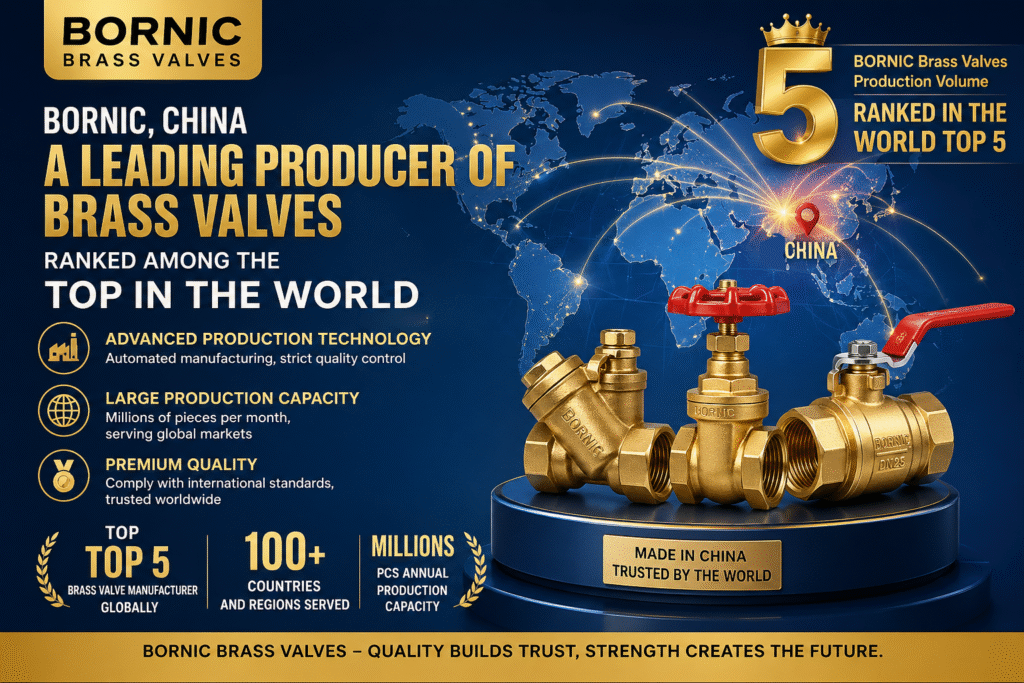
China has developed one of the world’s largest brass manufacturing ecosystems.
Benefits include:
- Large-scale production
- Extensive supplier networks
- Integrated supply chains
- Faster scalability
Product Diversity
Chinese manufacturers often offer broader product ranges, including:
- Brass valves
- Brass fittings
- OEM brass components
- Customized assemblies
Cost Efficiency
Due to manufacturing scale and supply chain integration, many Chinese brass suppliers can provide highly competitive pricing while maintaining international quality standards.
Export Experience
Leading Chinese brass manufacturers export extensively to:
- Europe
- South America
- Middle East
- CIS countries
- Africa
This experience often translates into stronger logistics support and flexible OEM services.
How to Choose a Reliable Brass Supplier
Selecting the right brass supplier is critical for long-term project success.
Consider the following:
Manufacturing Experience
Look for suppliers with proven production expertise.
Quality Certifications
Important certifications may include:
- ISO 9001
- CE
- WRAS
- ACS
- DVGW
Product Testing
Reliable suppliers perform:
- Pressure testing
- Material analysis
- Leakage testing
- Dimensional inspection
OEM Capability
Customization support is increasingly important for distributors and private-label brands.
Why Global Buyers Work with BORNIC
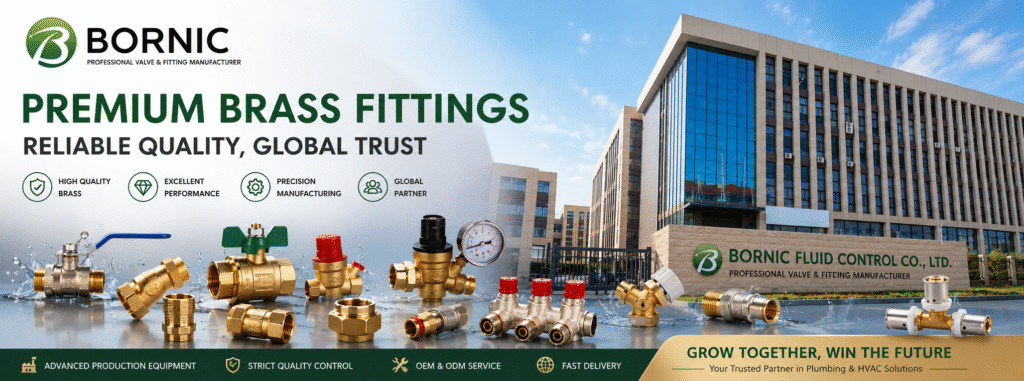
BORNIC specializes in manufacturing industrial brass components for international markets.
Our product portfolio includes:
- Brass ball valves
- Brass pipe fittings
- Brass compression fittings
- Brass hose fittings
- Brass manifolds
- HVAC brass components
- Plumbing accessories
By combining advanced forging technology, CNC machining, strict quality control, and export expertise, BORNIC supports distributors, wholesalers, contractors, and OEM brands worldwide.
Our focus on quality, competitive pricing, and reliable delivery allows customers to achieve long-term success in increasingly competitive markets.
Future Outlook for Industrial Brass Components
Global demand for industrial brass products is expected to continue growing due to:
- Urban infrastructure development
- HVAC modernization
- Water conservation projects
- Renewable energy systems
- Smart building technologies
Lead free brass solutions and precision-engineered components will play an increasingly important role in future industrial applications.
Conclusion
Industrial brass components remain indispensable across plumbing, HVAC, water treatment, gas distribution, and industrial manufacturing sectors.
By understanding manufacturing processes, material standards, and supplier capabilities, buyers can make informed sourcing decisions and improve system reliability.
Whether selecting brass suppliers, evaluating brass manufacturers, or sourcing lead free brass products, partnering with an experienced manufacturer is essential.
As global infrastructure continues to evolve, high-quality industrial brass components will remain at the heart of modern engineering systems, delivering durability, efficiency, and long-term performance.