Introduction: Are You Tired of Having Problems with Your Brass and Stainless Steel Valve Suppliers?
Finding a brass or stainless steel valve supplier is not difficult. Finding a manufacturer that can consistently deliver the right products, the right specifications and the right quality is a completely different challenge.
For European importers, wholesalers and distributors, purchasing valves and fittings involves much more than comparing prices.
A small problem with a brass ball valve can lead to installation difficulties. Incorrect thread dimensions can cause connection failures. Poor sealing materials may result in leakage. Inconsistent brass materials can affect product performance. Delayed shipments can interrupt a distributor’s entire sales plan.
These problems may look small when a quotation is being discussed, but they can become expensive after the products arrive at the warehouse or reach the end customer.
The same challenges exist when purchasing stainless steel valves and pipe fittings. Buyers must pay attention to material grades, corrosion resistance, pressure ratings, machining accuracy, welding quality and product documentation.
For European buyers, additional attention must be given to applicable EN standards, drinking water requirements, pressure equipment legislation and destination-market regulations.
At BORNIC, we understand that European customers are not simply looking for another valve supplier. They are looking for a manufacturing partner who can help reduce purchasing risks, improve product consistency and support long-term business growth.
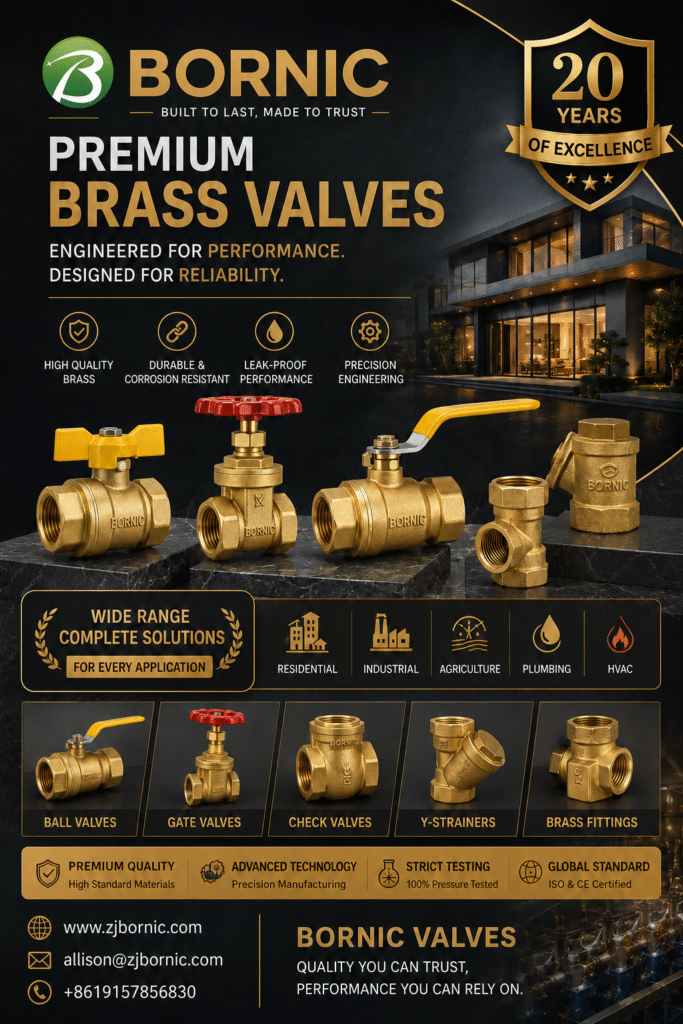
With more than 20 years of experience in brass valve and fitting manufacturing, BORNIC provides brass valves, brass fittings, heating components and customized fluid control products for international B2B customers.
In this article, we explore ten common sourcing problems faced by European buyers and explain how BORNIC can help address them.
1. Problem: Inconsistent Brass Material Quality
One of the biggest concerns when purchasing brass valves and fittings is material consistency.
Two products may look almost identical on the outside but have different material compositions.
For example, different brass grades have different mechanical properties, machinability, corrosion behavior and lead content.
Some commonly used brass grades include:
- CW617N – Commonly used for forged brass valve bodies and plumbing components.
- CW614N – Often used for machining applications.
- CW602N – A dezincification-resistant brass alloy.
- CW510L – A low-lead brass alloy.
- CW724R – A lead-free brass alloy option.
Choosing the correct material depends on the product’s application and technical requirements.
A buyer purchasing brass valves for general water installations may have different requirements from a customer developing products for drinking water contact applications.
Why does this become a problem?
If a supplier does not clearly confirm the brass grade, the buyer may receive products that do not match the original specification.
This can lead to:
- Unexpected material differences between batches.
- Difficulty meeting customer specifications.
- Corrosion or dezincification concerns in unsuitable applications.
- Problems with machining and product assembly.
- Additional inspection and replacement costs.
- Difficulty obtaining the required compliance documentation.
How BORNIC helps
BORNIC understands the importance of raw material selection.
We can discuss brass material grades according to the product design, application and customer specifications before production.
For customized projects, buyers can provide the required material designation and documentation expectations so that the technical requirements can be reviewed before an order is confirmed.
For drinking water applications, the final product must also meet the relevant hygiene and conformity requirements. A material grade alone does not automatically establish regulatory compliance.
BORNIC’s approach: Confirm the material before production, rather than discovering a material problem after delivery.
2. Problem: Brass Valve Leakage and Poor Sealing Performance
Leakage is one of the most frustrating problems for plumbing and heating distributors.
A brass ball valve may look excellent, but if the internal sealing system is not reliable, the product can create problems after installation.
Common causes of leakage include:
- Incorrect seat material or dimensions.
- Poor machining accuracy.
- Damaged sealing surfaces.
- Incorrect assembly.
- Unsuitable O-rings or gaskets.
- Inadequate pressure testing.
- Product use outside its specified operating conditions.
The choice of sealing material is particularly important.
Common elastomers include EPDM and NBR, but the appropriate material depends on factors such as temperature, fluid compatibility, pressure and intended service conditions.
Why does this become a problem for European buyers?
A leaking valve can damage the buyer’s reputation.
For distributors, the consequences may include:
- Customer complaints.
- Product returns.
- Installation costs.
- Replacement shipments.
- Warranty claims.
- Loss of future orders.
In commercial projects, a small component failure may create much larger maintenance expenses.
How BORNIC helps
BORNIC focuses on product assembly, sealing components and inspection according to agreed product specifications.
For brass valves, the relevant sealing structure and materials can be discussed before mass production.
Pressure and leakage testing requirements can also be agreed according to the applicable valve design and testing standard.
Our goal is to help customers reduce the risk of receiving products with inconsistent sealing performance.
A reliable valve should do more than open and close. It should perform consistently under its intended operating conditions.
3. Problem: Incorrect Thread Standards and Connection Dimensions
Thread compatibility is a common sourcing problem in the European plumbing and heating industry.
A valve may have the correct nominal size but still fail to connect properly because the thread type, pitch, profile or dimensional tolerance is different.
Some commonly encountered thread standards include:
- ISO 228-1 – Parallel pipe threads where pressure-tight joints are not made on the threads themselves.
- ISO 7-1 – Pipe threads where pressure-tight joints are made on the threads.
- EN 10226 – European requirements for pipe threads where pressure-tight joints are made on the threads.
- Other application-specific thread specifications.
For example, G threads and R threads should not be treated as interchangeable simply because they have similar nominal sizes.
A customer ordering a 1-inch brass ball valve may need a specific thread type and sealing arrangement.
If this detail is not confirmed, the products may arrive but prove unsuitable for the customer’s installation system.
How BORNIC helps
BORNIC can discuss different connection types and thread specifications for brass valves and fittings.
Customers can provide:
- Technical drawings.
- Sample products.
- Thread specifications.
- Nominal pipe dimensions.
- Installation requirements.
- Reference product photos.
Our team can review the requirements before quotation and production.
For customized orders, we recommend confirming the complete thread designation rather than providing only a nominal size such as 1/2″, 3/4″ or 1″.
BORNIC’s approach: Confirm every important connection detail before production to help prevent installation problems later.
4. Problem: Stainless Steel Valve Material Does Not Match the Application
Stainless steel valves are widely used in industrial, commercial and water supply applications because of their corrosion resistance and mechanical properties.
However, not all stainless steel grades have the same performance.
Common grades include:
- AISI 304 / EN 1.4301.
- AISI 316 / EN 1.4401.
- AISI 316L / EN 1.4404.
Different grades have different characteristics.
For example, 316 and 316L contain molybdenum, which generally improves resistance to certain forms of corrosion compared with 304. However, no stainless steel grade is universally suitable for every environment.
The actual suitability depends on fluid composition, chloride concentration, temperature, pressure, cleaning chemicals and operating conditions.
Common problems for buyers
European customers may encounter several issues when sourcing stainless steel valves and fittings:
- The material grade is not clearly stated.
- The delivered material does not match the quotation.
- Material certificates are missing.
- The product is not suitable for the intended environment.
- Surface treatment and finishing are inconsistent.
- Different production batches have different appearances.
These issues can become especially important for industrial buyers and customers working with demanding fluids or corrosive environments.
How BORNIC helps
BORNIC supports stainless steel valve and fitting sourcing requirements as part of its broader fluid control product portfolio.
For projects requiring stainless steel components, customers should specify the required grade, product standard, pressure rating, fluid conditions and documentation.
Material certificates and additional inspection requirements can be discussed according to the project and confirmed supply scope.
By clarifying these requirements before production, buyers can reduce the risk of material misunderstandings.
5. Problem: Products Look Similar but Fail to Meet the Required European Standards
European customers often need products that comply with specific technical standards or national regulatory requirements.
However, a common problem in international sourcing is that a supplier may describe a product as an “European standard valve” without clearly identifying which standard applies.
This can create confusion.
Different product categories are governed by different standards and regulations.
Examples include:
EN 13828
An important standard for manually operated copper alloy and stainless steel ball valves used in potable water installations in buildings.
EN 1254 Series
Covers different copper and copper alloy fittings, including compression, threaded and other connection types.
EN 12164 and EN 12165
Important European standards for copper alloy materials in different product forms.
EN 12266 Series
Provides testing requirements for applicable industrial valves.
PED 2014/68/EU
The Pressure Equipment Directive applies to pressure equipment within its scope. Not every brass or stainless steel valve automatically requires CE marking under PED.
EU Drinking Water Requirements
The Drinking Water Directive (EU) 2020/2184 and its supporting measures establish requirements for materials and products that come into contact with drinking water.
The harmonized EU minimum hygiene requirements are scheduled to apply from 31 December 2026, subject to applicable transitional arrangements.
Why is this important?
A product meeting one technical standard does not automatically meet every European requirement.
A valve may meet a dimensional requirement but still need additional testing or approval for a specific application.
Likewise, CE marking, drinking water approval and product testing are different matters.
How BORNIC helps
BORNIC takes a product-specific approach.
We encourage customers to identify the relevant standard, application and required documentation before production.
Our team can discuss technical specifications, material requirements, product testing and inspection arrangements according to the agreed project.
We do not believe that using the phrase “European standard” is enough.
The important question is whether the actual product is designed, manufactured and verified according to the requirements that apply to its intended use.
BORNIC works with customers to turn technical requirements into clear manufacturing specifications.
6. Problem: Poor Product Consistency Between Different Orders
For European distributors, consistency is extremely important.
A customer may purchase 5,000 brass ball valves today and order another 5,000 three months later.
The second batch should match the agreed product specifications as closely as required.
However, some buyers experience differences between batches, including:
- Handle dimensions.
- Nickel-plated surface appearance.
- Body markings.
- Thread dimensions.
- Valve operating torque.
- Packaging.
- Internal sealing components.
These differences make inventory management and customer service more difficult.
For private-label brands, inconsistent products can also damage brand reputation.
How BORNIC helps
BORNIC focuses on confirming product specifications before production.
For repeat orders, important details should be recorded and confirmed, including:
- Product drawings.
- Brass material grade.
- Nominal size.
- Thread type.
- Pressure rating.
- Handle design.
- Surface finish.
- Sealing material.
- Product marking.
- Packaging specifications.
Where applicable, inspection requirements and reference samples can also be agreed.
This helps establish a clearer basis for repeat production.
Our goal is to help customers build stable product ranges rather than repeatedly solve the same technical problems.
7. Problem: Long Lead Times and Unreliable Delivery Schedules
Delivery delays are another major concern for European importers.
A late shipment may affect warehouse planning, distributor stock levels and project schedules.
For customers supplying plumbing and heating products, missing inventory can mean losing orders to competitors.
Common reasons for delays include:
- Late confirmation of technical drawings.
- Unavailable raw materials.
- Customized product development.
- Changes to order specifications.
- Packaging approval delays.
- Unexpected production scheduling changes.
- Incomplete communication between buyer and supplier.
Customized brass valves and fittings may require additional preparation compared with standard products.
How BORNIC helps
BORNIC encourages customers to communicate their purchasing plans early.
Before an order enters production, we recommend confirming:
- Product models and specifications.
- Order quantities.
- Material requirements.
- Drawings and samples, if applicable.
- Packaging and branding.
- Inspection requirements.
- Target delivery date.
This allows both sides to evaluate the production arrangement more effectively.
For larger and customized orders, advance planning is particularly important.
BORNIC’s production schedule can be busy, especially when multiple product categories and customized specifications are involved.
If you have a purchasing plan for the coming months, contact BORNIC early so we can discuss production capacity and estimated lead times before you need the goods.
8. Problem: Too Many Suppliers for Different Brass and Stainless Steel Products
Many European wholesalers and importers purchase different product categories from multiple factories.
One supplier provides brass ball valves.
Another supplies compression fittings.
A third produces underfloor heating manifolds.
Another handles stainless steel valves and pipe fittings.
Although this approach may work, it also increases purchasing complexity.
Buyers may need to manage:
- Multiple quotations.
- Different production schedules.
- Separate quality inspection processes.
- Different packaging arrangements.
- More communication.
- Multiple shipping arrangements.
- Different after-sales contacts.
This can consume significant time for purchasing teams.
How BORNIC helps
BORNIC offers a broad range of brass valves, fittings and heating components.
Our product categories include:
Brass Valves
- Brass ball valves.
- Brass check valves.
- Brass stop valves.
- Brass gate valves.
- Brass angle valves.
- Brass radiator valves.
Brass Fittings
- Brass compression fittings.
- Brass threaded fittings.
- Brass adapters.
- Brass connectors.
- Brass couplings.
- Customized brass components.
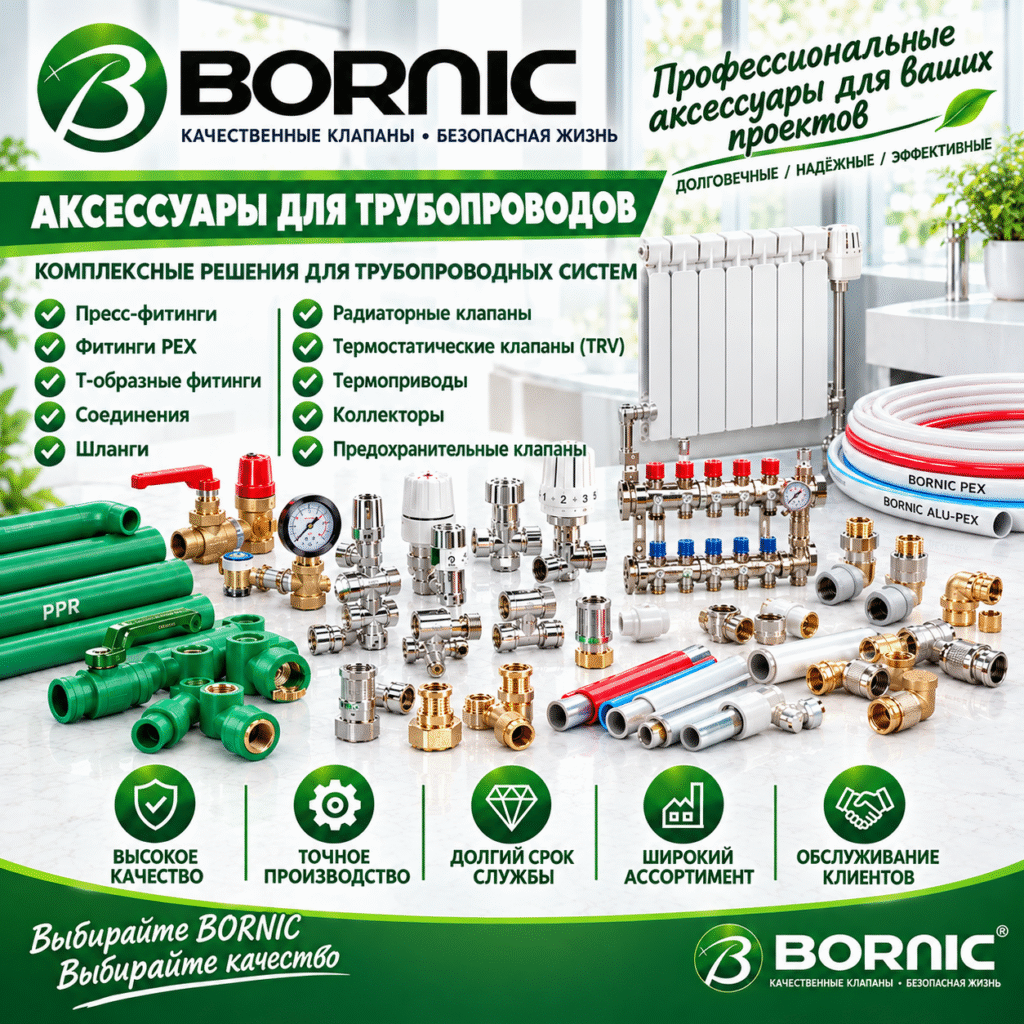
Heating and HVAC Components
- Underfloor heating manifolds.
- Thermostatic mixing units.
- Flow meters.
- Balancing valves.
- Heating control valves.
- Brass heating accessories.
Stainless Steel Products
- Stainless steel valves.
- Stainless steel pipe fittings.
- Related fluid control components, subject to product specifications and project requirements.
By discussing multiple product categories with one manufacturing partner, buyers may simplify supplier communication and purchasing coordination.
Not every product needs to come from the same factory, but having a capable partner for several related categories can make supply chain management easier.
9. Problem: Poor Communication and Misunderstood Product Requirements
A quotation is only useful if both sides understand exactly what is being purchased.
Unfortunately, communication problems can happen when product specifications are incomplete or technical details are misunderstood.
For example:
- The buyer requests BSP threads but receives a different thread configuration.
- The required brass material is not confirmed.
- The pressure rating is interpreted incorrectly.
- The buyer expects a particular handle design.
- Packaging and logo requirements are not discussed until production has started.
- A product photo is mistaken for a complete technical specification.
These problems can create unnecessary revisions and delays.
How BORNIC helps
BORNIC encourages customers to provide complete product information from the beginning.
We welcome:
- Product drawings.
- Samples.
- Product photos.
- Technical datasheets.
- Existing catalog references.
- Material requirements.
- Target market information.
Our team can use this information to discuss the product structure, dimensions, material and manufacturing requirements.
We believe that clear communication before production is much better than solving avoidable misunderstandings after shipment.
10. Problem: Low Prices Create Higher Costs Later
Many buyers compare suppliers mainly by unit price.
However, the cheapest quotation is not always the most economical choice.
Consider a simple example.
Supplier A offers a brass ball valve at a lower unit price, but the buyer later experiences inconsistent dimensions and leakage complaints.
Supplier B offers a slightly higher price but provides better specification control, agreed testing requirements and more consistent production.
The real purchasing cost should include more than the initial quotation.
It may also include:
- Inspection costs.
- Product replacement.
- Freight for defective goods.
- Installation costs.
- Customer complaints.
- Warranty expenses.
- Lost sales.
- Time spent resolving disputes.
For European distributors, the long-term reputation of their own brand is also valuable.
How BORNIC helps
BORNIC focuses on offering competitive factory pricing while working according to agreed product specifications.
Our objective is to help customers balance purchase price, product quality and supply reliability.
We welcome buyers who want to compare technical specifications rather than only compare prices.
If you provide us with your existing product specifications or target price range, we can discuss a suitable manufacturing solution.
A good supplier should help reduce the total cost of purchasing, not simply offer the lowest number on a quotation.
11. Why Choose BORNIC to Solve Your Valve and Fitting Sourcing Problems?
After understanding the common challenges in brass and stainless steel valve sourcing, the next question is simple:
What should you expect from a reliable manufacturing partner?
BORNIC combines manufacturing experience, a broad product portfolio and customized production capabilities to support international B2B customers.
More Than 20 Years of Manufacturing Experience
BORNIC has more than 20 years of experience in brass valves and fittings manufacturing.
Our experience helps us understand the requirements of plumbing, heating, HVAC and fluid control applications.
A Wide Range of Brass Products
Customers can discuss different brass valve and fitting categories with one manufacturing partner.
This includes ball valves, check valves, stop valves, gate valves, compression fittings, threaded fittings and heating components.
Customized OEM and ODM Manufacturing
We support customized projects according to drawings, samples and technical specifications.
Product dimensions, material options, connections, surface finishes, logos and packaging can be discussed.
Quality-Focused Manufacturing
We pay attention to material selection, machining, assembly, sealing and inspection according to the agreed specifications.
Competitive Factory Pricing
As a manufacturer, BORNIC focuses on production efficiency and cost control to provide competitive factory quotations.
European Market Requirements
We understand that European customers may have different requirements for EN standards, material specifications, testing and drinking water applications.
We welcome technical discussions before production to help clarify the appropriate requirements for each product.
Long-Term B2B Cooperation
BORNIC works with importers, wholesalers, distributors, plumbing suppliers, heating companies and engineering businesses.
We aim to develop long-term partnerships through clear communication, product consistency and reliable cooperation.
12. What Information Should You Send to a Brass or Stainless Steel Valve Manufacturer?
To reduce sourcing problems, buyers should prepare as much technical information as possible before requesting a quotation.
Here is a practical checklist for European purchasing teams.
| Information | Why It Matters |
|---|---|
| Product name and model | Identifies the correct product |
| Drawing or sample | Confirms structure and dimensions |
| Material grade | Avoids material misunderstandings |
| Nominal size (DN) | Confirms product dimensions |
| Thread standard | Ensures connection compatibility |
| Pressure rating | Defines operating requirements |
| Temperature range | Helps select suitable materials |
| Fluid application | Helps evaluate product suitability |
| Applicable EN standard | Clarifies technical requirements |
| Testing requirements | Defines inspection expectations |
| Quantity | Helps determine MOQ and quotation |
| Logo and packaging | Supports private-label production |
| Target delivery date | Helps plan production |
If you are purchasing multiple products, you can also send your existing product catalog or purchasing list.
BORNIC can review the requirements and discuss which products are suitable for manufacturing.
13. Frequently Asked Questions About Brass and Stainless Steel Valve Sourcing
Q1: How do I choose a reliable brass valve manufacturer in China?
Check the manufacturer’s production experience, product range, material control, technical communication, inspection process and ability to support your required specifications.
Ask for product drawings, material details, relevant test reports and samples where appropriate.
Do not make a purchasing decision based only on the lowest price.
Q2: What is the difference between CW617N and CW614N brass?
CW617N is commonly used for forged brass components, including valve bodies and plumbing fittings.
CW614N is commonly used for machining applications.
The correct grade depends on product design, manufacturing process and intended application.
Q3: What is DZR brass?
DZR stands for dezincification-resistant brass.
It is designed to provide improved resistance to dezincification, a form of corrosion in which zinc is selectively removed from brass.
DZR brass is important for certain water supply applications, but material suitability and compliance should be confirmed for the specific product and market.
Q4: Why does my brass ball valve leak?
Possible reasons include damaged sealing surfaces, unsuitable sealing materials, incorrect assembly, dimensional problems or operating conditions outside the product specification.
The cause should be investigated through product inspection and appropriate testing.
Q5: What is the difference between G thread and R thread?
G threads are parallel pipe threads under ISO 228-1, while R threads are taper external pipe threads under ISO 7-1.
They have different connection and sealing principles and should not be treated as interchangeable without checking the complete joint design.
Q6: Which stainless steel grade is better, 304 or 316?
Neither grade is universally better for every application.
316 generally offers better resistance to certain corrosive environments due to its molybdenum content. However, the correct selection depends on the fluid, chloride level, temperature and operating conditions.
Q7: Can BORNIC manufacture products according to EN standards?
BORNIC can discuss manufacturing according to applicable EN standards and customer technical specifications.
The relevant standard, product design, testing and conformity requirements must be confirmed for each product.
Q8: Can BORNIC produce brass valves with our own logo?
Yes. OEM and ODM projects can include customized logos, product markings and packaging, subject to the agreed manufacturing requirements.
Q9: Can I order brass valves and fittings together?
Yes. BORNIC offers multiple product categories, and customers can discuss combined purchasing requirements.
MOQ, production arrangements and delivery schedules depend on the specific products and quantities.
Q10: How can I avoid problems when placing my first order?
Provide clear drawings, material requirements, thread specifications, product standards, estimated quantities and packaging details.
For customized products, confirm samples or technical drawings before mass production where necessary.
14. Stop Looking for the Cheapest Supplier. Start Looking for the Right Manufacturing Partner.
A brass valve or stainless steel fitting may be a small component in a plumbing or heating system, but the consequences of poor quality can be much bigger than its purchase price.
For European importers and distributors, reliable sourcing means reducing technical misunderstandings, maintaining product consistency, controlling costs and protecting customer relationships.
BORNIC understands these challenges.
With more than 20 years of manufacturing experience, we provide brass valves, brass fittings, heating components and customized fluid control products for international B2B customers.
Whether you are sourcing:
- Brass ball valves.
- Brass check valves.
- Brass stop and gate valves.
- Brass compression fittings.
- Brass threaded fittings.
- Stainless steel valves.
- Stainless steel pipe fittings.
- Underfloor heating manifolds.
- HVAC brass components.
- Customized OEM and ODM products.
BORNIC welcomes your inquiry.
If you have experienced leakage problems, inconsistent materials, incorrect threads, unstable quality or difficulties with customized production, tell us about your requirements.
Our team will be happy to review your product specifications and discuss a suitable manufacturing solution.
Looking for a reliable brass and stainless steel valve supplier for your European business?
Send BORNIC your product list, drawings or samples. Let’s discuss how we can help make your next purchasing project more efficient and reliable.
BORNIC – Your Trusted Partner in Fluid Control Solutions.
Company: Zhejiang Bornic Fluid Control Co., Ltd.
Manufacturing Location: Yuhuan, Zhejiang, China
Website: https://www.zjbornic.com
Email: Global@zjbornic.com
WhatsApp: +86 191 57856830
Products: Brass Valves | Stainless Steel Valves | Brass Fittings | Stainless Steel Pipe Fittings | Plumbing Components | HVAC Products | Underfloor Heating Components
Services: OEM Manufacturing | ODM Manufacturing | Customized Brass Products | Technical Specification Review | B2B Wholesale Supply
BORNIC – Better Manufacturing. More Reliable Connections. Stronger Partnerships.
#BORNIC #BrassValves #StainlessSteelValves #BrassFittings #ValveManufacturer #BrassValveSupplier #StainlessSteelFittings #PlumbingSupplies #EuropeanValveSupplier #OEMManufacturer #HVACComponents #UnderfloorHeating