SEO Title
Brass Pipe Fittings Manufacturing: How Leading Brass Fittings Manufacturers Produce Reliable Plumbing Components
Meta Description
Discover the complete brass pipe fittings manufacturing process, types of brass plumbing fittings, industrial applications, supplier selection tips, and how to choose reliable brass pipe fittings manufacturers for global projects.
Introduction
Brass pipe fittings are among the most widely used components in modern plumbing, HVAC, water distribution, gas control, and industrial piping systems. As global demand for durable and corrosion-resistant piping solutions continues to grow, the importance of reliable brass pipe fittings manufacturing has never been greater.
Whether you are a distributor, wholesaler, contractor, OEM brand owner, or project engineer, understanding how brass fittings are produced can help you choose the right supplier and ensure long-term system reliability.
This guide explores the complete manufacturing process, common brass fittings names, industrial applications, quality standards, and how to evaluate brass fittings manufacturers for your next project.

What Are Brass Pipe Fittings?
Brass pipe fittings are mechanical connectors used to join, redirect, terminate, or adapt piping systems. Manufactured primarily from copper-zinc alloys, brass fittings combine excellent corrosion resistance with high mechanical strength.
Brass fittings are commonly found in:
- Residential plumbing systems
- Commercial buildings
- HVAC installations
- Industrial fluid transfer systems
- Irrigation systems
- Water treatment facilities
- Gas distribution networks
Because of their durability and machinability, brass remains one of the preferred materials for plumbing and industrial applications worldwide.
Common Brass Fittings Names
Understanding common brass fittings names is important when sourcing products from brass fitting suppliers.
Popular fitting types include:
Brass Coupling
Used to connect two pipes of the same diameter.
Brass Elbow
Changes the direction of flow.
Brass Tee
Creates branch connections.
Brass Reducer
Connects different pipe sizes.
Brass Union
Allows easy maintenance and disassembly.
Brass Adapter
Converts thread types or connection standards.
Brass Nipple
Connects two female threaded components.
Brass Hose Fitting
Connects flexible hoses to rigid piping systems.
These products form the foundation of modern plumbing and industrial piping systems.
The Brass Pipe Fittings Manufacturing Process
High-quality brass pipe fittings manufacturing involves several precision-controlled production stages.
1. Raw Material Selection
Manufacturing begins with certified brass alloys.
Common materials include:
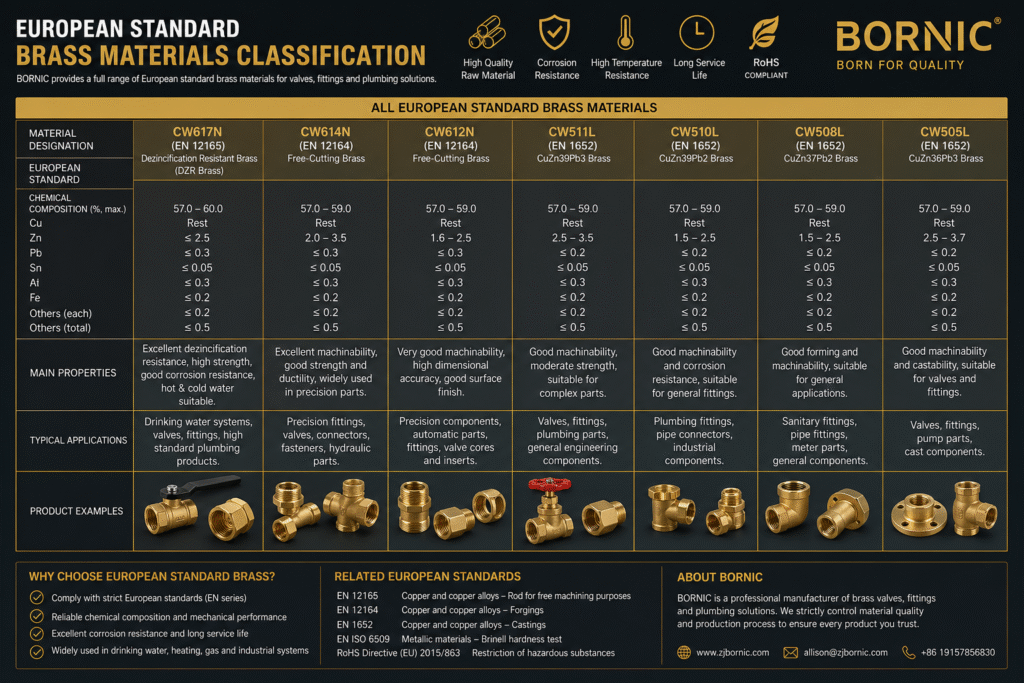
- CW617N
- CW617N-DW
- CW602N (DZR Brass)
- Lead-Free Brass Alloys
Material selection directly impacts:
- Corrosion resistance
- Mechanical strength
- Drinking water safety
- Service life
Leading brass plumbing fittings manufacturers carefully verify incoming material composition before production begins.
2. Brass Forging
Hot forging is the most common manufacturing method for premium brass fittings.
Advantages include:
- Higher density
- Improved strength
- Better pressure resistance
- Longer service life
Forged fittings are generally preferred over cast fittings for critical plumbing applications.
3. CNC Machining
After forging, components are machined using CNC equipment.
Precision machining ensures:
- Accurate dimensions
- Smooth threads
- Consistent quality
- Leak-free assembly
Modern brass pipe fittings manufacturers utilize automated machining centers to maintain production consistency.
4. Thread Processing
Thread quality is critical for sealing performance.
Common standards include:
- BSP
- BSPT
- NPT
- G Thread
Reliable thread processing reduces installation issues and leakage risks.
5. Surface Finishing
Many brass fittings receive additional finishing treatments.
Popular options include:
- Natural brass
- Nickel plated brass
- Chrome plated brass
Surface treatment improves corrosion resistance and appearance.
6. Testing and Inspection
Before shipment, fittings undergo strict quality inspections.
Typical tests include:
- Pressure testing
- Leakage testing
- Thread gauge inspection
- Dimensional verification
- Material analysis
Professional brass fittings manufacturers implement comprehensive quality control procedures to ensure compliance with international standards.
Industrial Brass Fittings Applications
Industrial brass fittings are used across numerous industries.
Plumbing Systems
Brass plumbing fittings provide reliable connections for:
- Hot water systems
- Cold water systems
- Drinking water distribution
HVAC Systems
Applications include:
- Heating manifolds
- Radiator valves
- Balancing systems
- Chilled water systems
Industrial Fluid Systems
Industrial brass fittings are frequently used in:
- Manufacturing facilities
- Compressed air systems
- Process water systems
Irrigation Systems
Brass fittings are ideal for:
- Agricultural irrigation
- Landscape watering
- Greenhouse applications
Why Buyers Prefer Brass Plumbing Fittings
Several advantages make brass one of the most popular plumbing materials globally.
Corrosion Resistance
Brass performs exceptionally well in water environments.
High Pressure Performance
Suitable for demanding operating conditions.
Excellent Machinability
Allows precise manufacturing.
Long Service Life
Properly installed brass fittings can operate for decades.
Temperature Resistance
Suitable for both hot and cold water systems.
American Made Brass Fittings vs Imported Brass Fittings
Many buyers compare American made brass fittings with imported alternatives.
American-made products often emphasize:
- Domestic sourcing
- Local compliance standards
- Shorter delivery times
However, leading international brass pipe fittings manufacturers can often provide:
- Competitive pricing
- Larger production capacity
- OEM manufacturing services
- Flexible customization options
Ultimately, supplier quality and manufacturing capability matter more than geographic location alone.
How to Choose Reliable Brass Pipe Fittings Manufacturers
Selecting the right manufacturing partner is critical.
Manufacturing Experience
Look for companies with years of production expertise.
Quality Certifications
Common certifications include:
- ISO 9001
- CE
- ACS
- WRAS
- DVGW
Production Capacity
Ensure the supplier can handle your volume requirements.
Material Traceability
Reliable suppliers provide material certificates.
Export Experience
Global experience often indicates mature quality systems.
Brass Plumbing Fittings Supplier Checklist
Before placing an order, evaluate:
✔ Product quality
✔ Manufacturing process
✔ Delivery capability
✔ Technical support
✔ Packaging standards
✔ OEM capabilities
✔ After-sales service
A professional brass plumbing fittings supplier should be able to provide complete technical documentation and testing reports.
The Growing Global Demand for Brass Pipe Fittings
Several trends continue to drive market growth:
- Urban infrastructure development
- Water conservation projects
- HVAC modernization
- Smart building construction
- Industrial automation
As a result, demand for reliable brass fitting suppliers continues to increase worldwide.
Why Global Buyers Choose BORNIC
BORNIC specializes in the manufacturing and export of high-quality brass valves and brass pipe fittings for international markets.
Our product range includes:
- Brass pipe fittings
- Brass compression fittings
- Brass hose fittings
- Brass ball valves
- Check valves
- Stop valves
- Manifolds
- HVAC accessories
With advanced forging technology, CNC machining equipment, and strict quality control systems, BORNIC supports distributors, wholesalers, OEM brands, and project contractors across Europe, South America, the Middle East, and CIS markets.
Our commitment to quality, competitive pricing, and reliable delivery makes us a trusted partner for global plumbing and fluid control solutions.
Conclusion
Brass pipe fittings manufacturing is a highly specialized process that combines metallurgy, precision machining, forging technology, and rigorous quality control. Whether sourcing industrial brass fittings, plumbing connectors, or customized OEM products, choosing experienced brass fittings manufacturers is essential for long-term system performance.
By understanding production methods, material standards, and supplier capabilities, buyers can make informed purchasing decisions and reduce project risks.
As demand for reliable plumbing and fluid control systems continues to grow, high-quality brass pipe fittings will remain a cornerstone of modern infrastructure worldwide.